Boarding canoes
Machetes against ironclads.
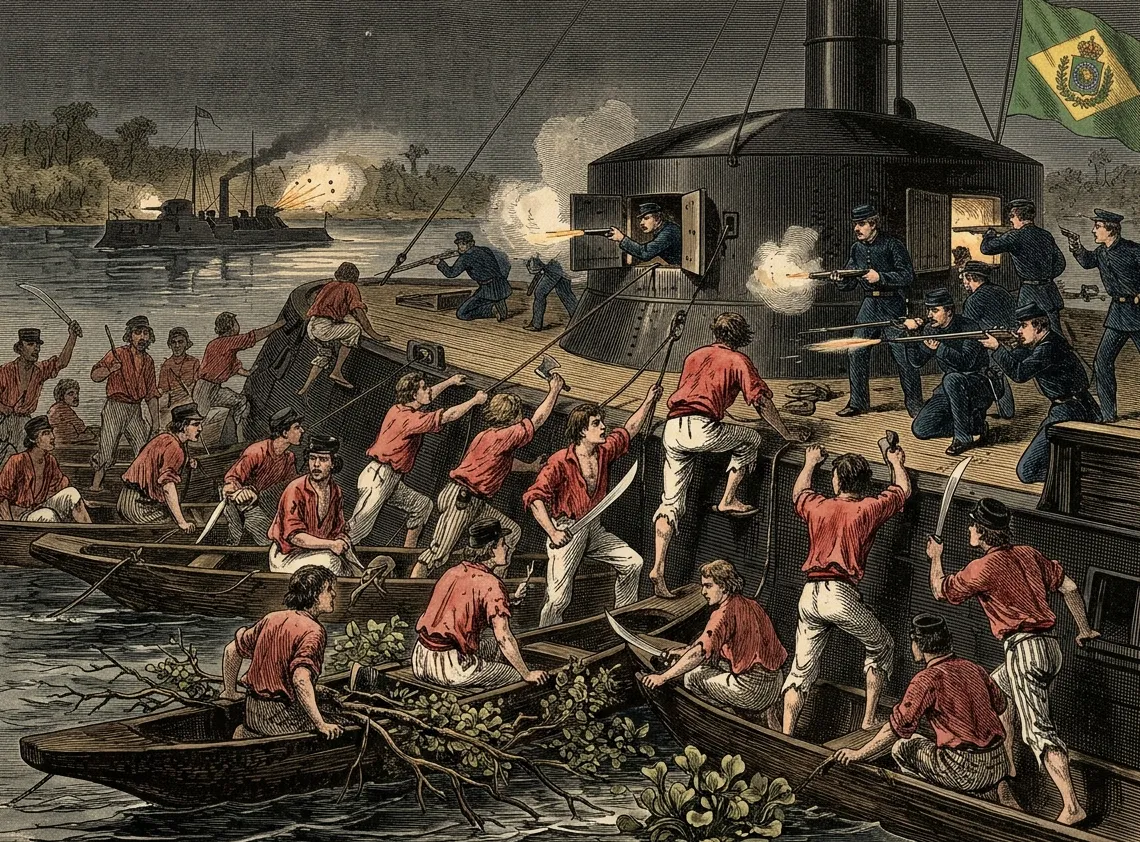
- Craft
- Canoes tied in pairs with rawhide rope
- Camouflage
- Branches and camalotes (water hyacinths), to look like floating plants
- Crew
- About 12 men per canoe ‡
- Weapons
- Sabers, machetes, axes, pistols and hand grenades
- Attacks
- 2 March and 9 July 1868
With the imperial fleet inside the river, López tried to take the ironclads by boarding. The canoes came down at night with the current, in pairs, disguised as camalotes. On 2 March 1868 they boarded the Lima Barros and the Cabral; on 9 July, the Barroso and the Rio Grande. The crews shut themselves in the casemates while other ships swept the decks with canister: both attacks failed, with heavy Paraguayan losses.
Sources: Revista Marítima Brasileira, the boardings of 1868, with quotations from Thompson; “Assault on the battleships Cabral and Lima Barros” and “Assault on the battleships Barroso and Rio Grande”, English Wikipedia.
Open in the illustrated encyclopedia ›
Guerra Guasu Collection · by José Báez · Free for everyone · Home · Privacy