December 1868
Ytororó, Avay and Lomas Valentinas · 6 to 30 December 1868 · Pikysyry campaign
Battle card
| Date | From 6 to 30 December 1868 | |
|---|---|---|
| Location | Between San Antonio and Angostura, south of Asunción | |
| War | Triple Alliance · Pikysyry campaign | |
| Duration | About three weeks: Ytororó (6 December), Avay (11), Lomas Valentinas (21 to 27) and Angostura (30) | |
| Result | Allied victory. The Paraguayan army is destroyed, but López escapes and the war goes on. | |
| Paraguay | Empire of Brazil, Argentina and Uruguay | |
| Commanders | Marshal Francisco Solano López (Itá Ybaté) General Bernardino Caballero (Ytororó and Avay) Lieutenant Colonel George Thompson (Angostura) | Marquis of Caxias (commander in chief) Manuel Luís Osório, Alexandre Argolo Ferrão, João Manuel Mena Barreto and Jacinto Machado Bittencourt (Brazilian corps) Juan Andrés Gelly y Obes (Argentines) Enrique Castro (Uruguayans) |
| Forces | Ytororó: 4,000 to 6,000 ‡ Avay: 5,000 to 5,600 ‡ Lomas Valentinas: 3,000 to 9,800 ‡ | Ytororó: about 18,600 Brazilians landed Avay: 17,000 to 19,000 ‡ Lomas Valentinas: about 19,400 Brazilians, plus Argentines and Uruguayans |
| Artillery | Ytororó: 12 cannons Avay: 18 cannons ‡ Angostura: batteries on the river | Avay: 26 cannons Brazilian fleet with ironclads |
| Weapons | Flintlock muskets, lances and sabers. At Avay, the rain soaked the powder. | Rifled muskets and carbines |
| Casualties | Ytororó: 1,200 to 1,450 ‡ Avay: 3,000 to 3,600 dead and 1,000 to 1,200 prisoners ‡ Lomas Valentinas: 3,000 to 8,000 ‡ Angostura: 1,300 to 1,907 surrendered ‡ | Ytororó: 1,860 to 3,000 ‡ Avay: 1,663 to 2,000 ‡ Lomas Valentinas: about 3,270 Brazil, in the whole campaign: 10,079 according to Doratioto |
‡ Figure disputed among sources. Ytororó and Avay were Brazilian-only battles; Argentines and Uruguayans fought at Pikysyry and at Lomas Valentinas.
A note to the reader
Each page carries a mark that shows what kind of information you are reading.
The plates in this work are contemporary illustrations, made in the manner of period engravings. They are not original documents.
After Humaitá
In December 1868, the war came within a few leagues of Asunción.
Humaitá had fallen on 25 July. Marshal Francisco Solano López pulled his army back to the north and raised a new line along the Pikysyry stream: about nine kilometers of trench, from the Paraguay River to Lake Ypoá. On the river, the Angostura batteries barred the way to the fleet. Behind it, on the Lomas Valentinas, López set up his headquarters: Itá Ybaté.
In September, according to Efraím Cardozo, about 10,000 men and 100 cannons garrisoned Pikysyry. The Marquis of Caxias, commander of the Brazilian forces, judged the position too strong for a frontal attack.
A road of palms
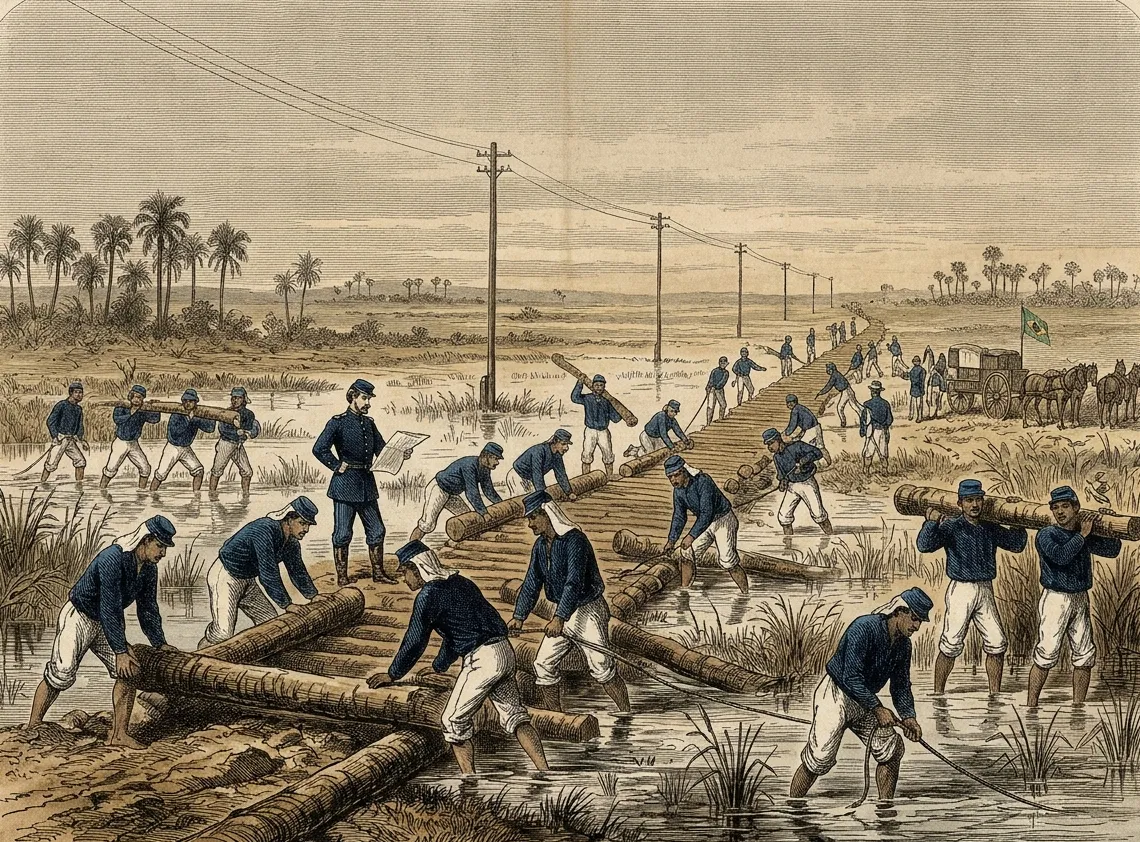
Caxias chose another way: to go around the line through the Chaco, the western bank of the river.
Facing the Paraguayan positions, across the water, there were only marshes and woods. There the Brazilian engineers built a road over the mud, made of caranday palm trunks laid side by side. According to the Brazilian Army magazine, they felled about 6,000 palms. The work took 23 days, from 16 October to 7 November, under the direction of Lieutenant Colonel Rufino Enéas Galvão. A telegraph line followed the route.
The Chaco troops were under the command of General Alexandre Gomes de Argolo Ferrão.
From behind
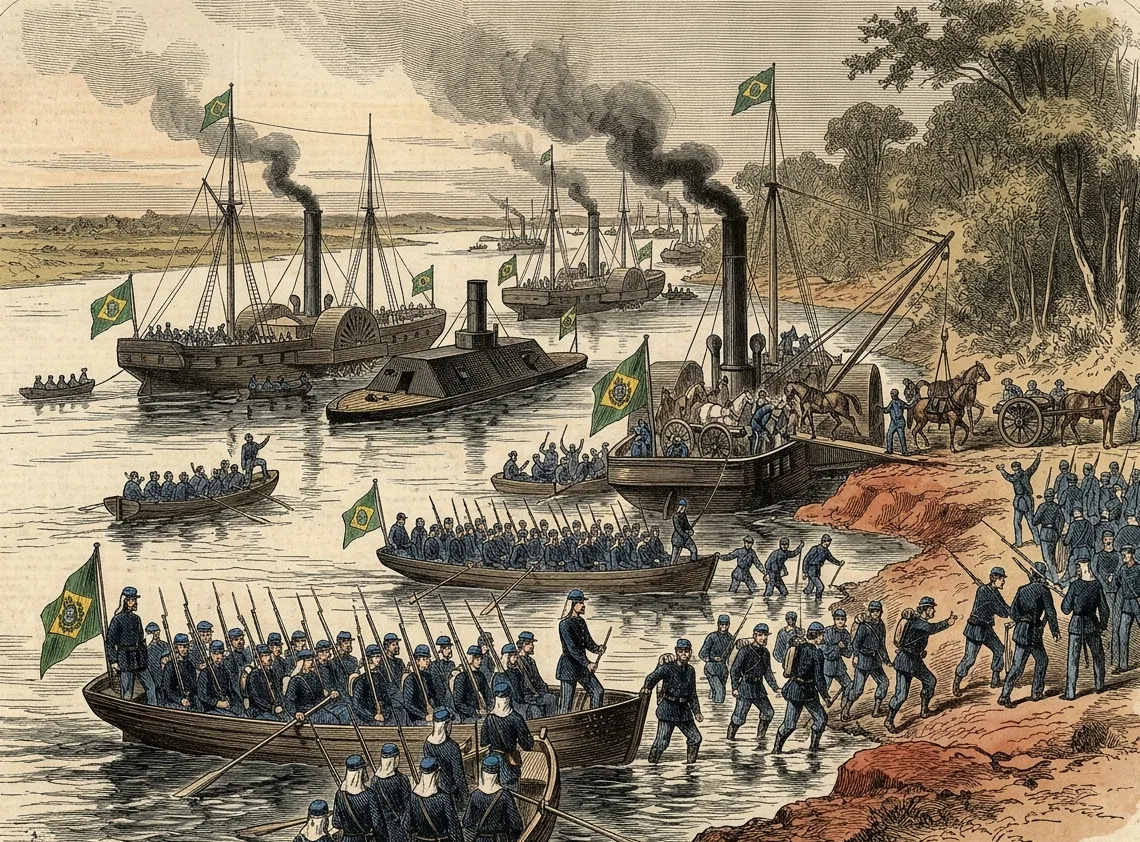
In early December, the Brazilian army marched along the Chaco road and crossed the river again, north of Angostura.
The ships of the fleet carried the troops from Santa Helena, in the Chaco, to San Antonio, on the eastern bank. About 18,600 men landed: almost 17,000 infantry, plus cavalry and artillery. Now they were behind Pikysyry, between López and Asunción.
In front of the line, at Palmas, the Argentines and the Uruguayans stayed behind to pin the Paraguayans in their trenches. Caxias was in command of it all. He was 65 years old.
The bridge at Ytororó
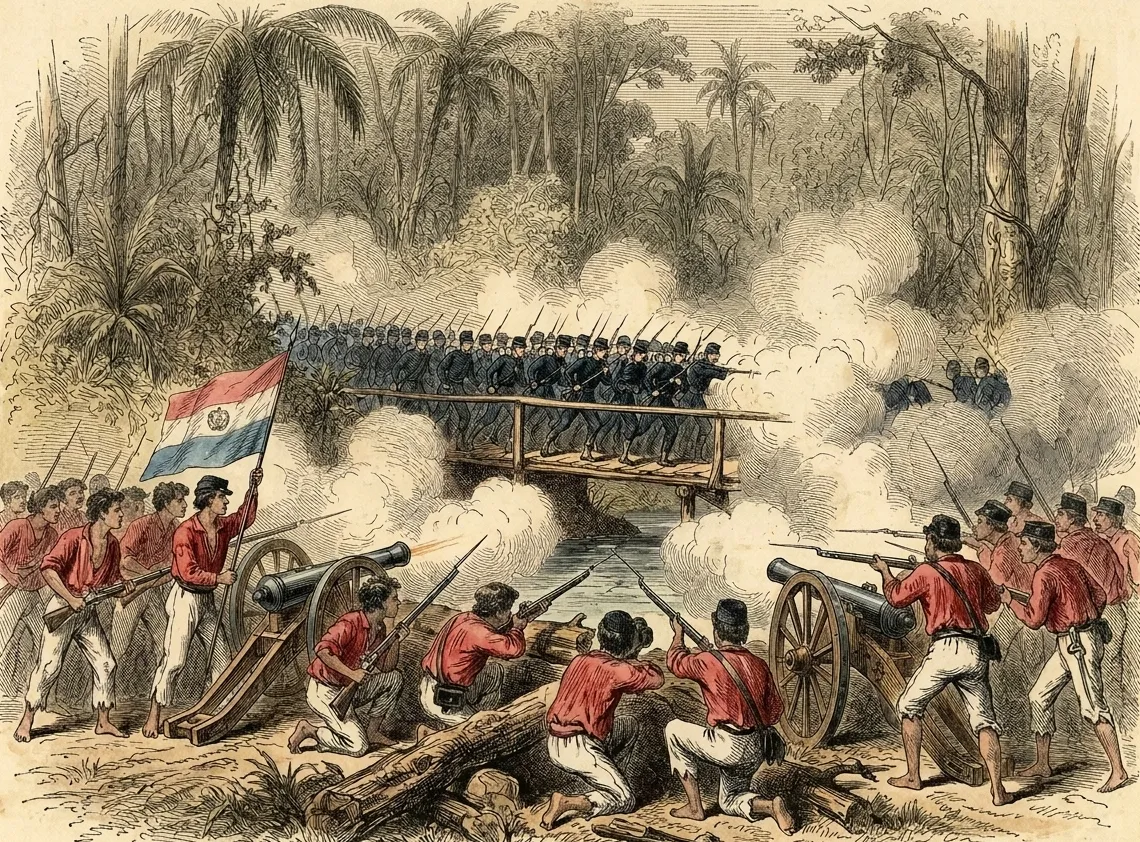
On 6 December, about six kilometers south of San Antonio, the road crossed the Ytororó stream over a narrow bridge.
Bernardino Caballero was waiting there, the same man as at Tatayibá. He was 29 years old and had been a general since July. He commanded about 5,000 men, infantry and cavalry, with 12 cannons. The bridge lay in a valley of thick woods: the Brazilians could only pass in column, a few at a time.
The first assaults broke apart under the Paraguayan artillery. Colonel Fernando Machado, leading a brigade, was killed. The bridge changed hands several times. General Hilário Gurjão was mortally wounded and General Argolo was also wounded.
“Follow me, those who are Brazilian”
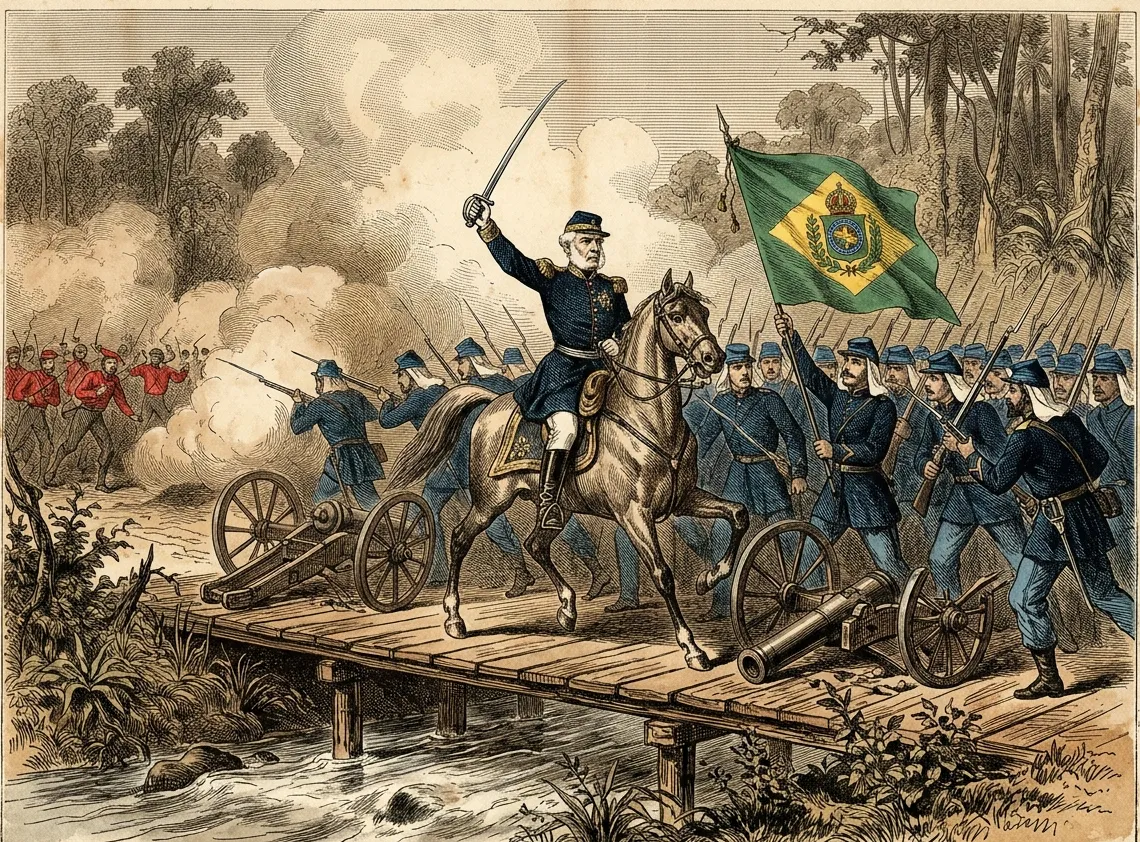
With the attack stalled and Osório's troops delayed, Caxias drew his sword and advanced on the bridge himself.
Colonel João Niederauer Sobrinho's cavalry had already crossed and taken four cannons. With the final push, the Paraguayan line gave way. Caballero, threatened from the rear, withdrew south, toward the Avay stream.
The battle lasted from late morning until nightfall. The Paraguayans lost about 1,200 men. Brazilian casualties were about 1,860 according to Brazilian figures; Thompson and the Paraguayan sources speak of almost 3,000.
Avay, in the rain
Five days later, on 11 December, Caballero blocked the road again, this time on the Avay stream, near Villeta.
He had between 5,000 and 5,600 men and 18 cannons. On the other side, between 17,000 and 19,000 Brazilians advanced, with 26 cannons. According to Helio Vera, the Paraguayan position was very vulnerable.
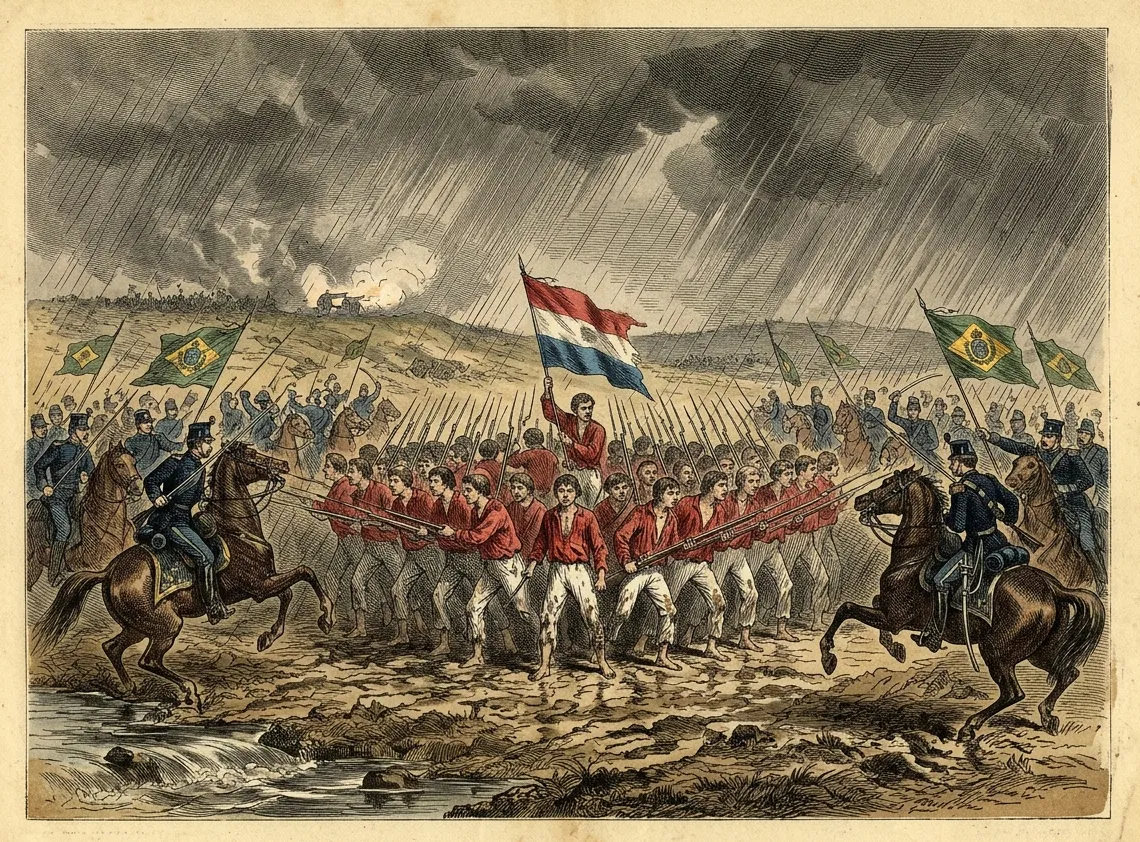
During the fighting a storm broke. Juan Crisóstomo Centurión, a Paraguayan officer, spoke of a “torrential storm”. The rain soaked the powder of the old muskets, and the Paraguayans fought with the bayonet, formed in square, for hours.
In the middle of a charge, a bullet struck General Manuel Luís Osório, who led the Brazilian vanguard, in the face and shattered his jaw. According to the Brazilian account, he wrapped his face in his poncho and stayed at the head of his troops.
Almost no one came back
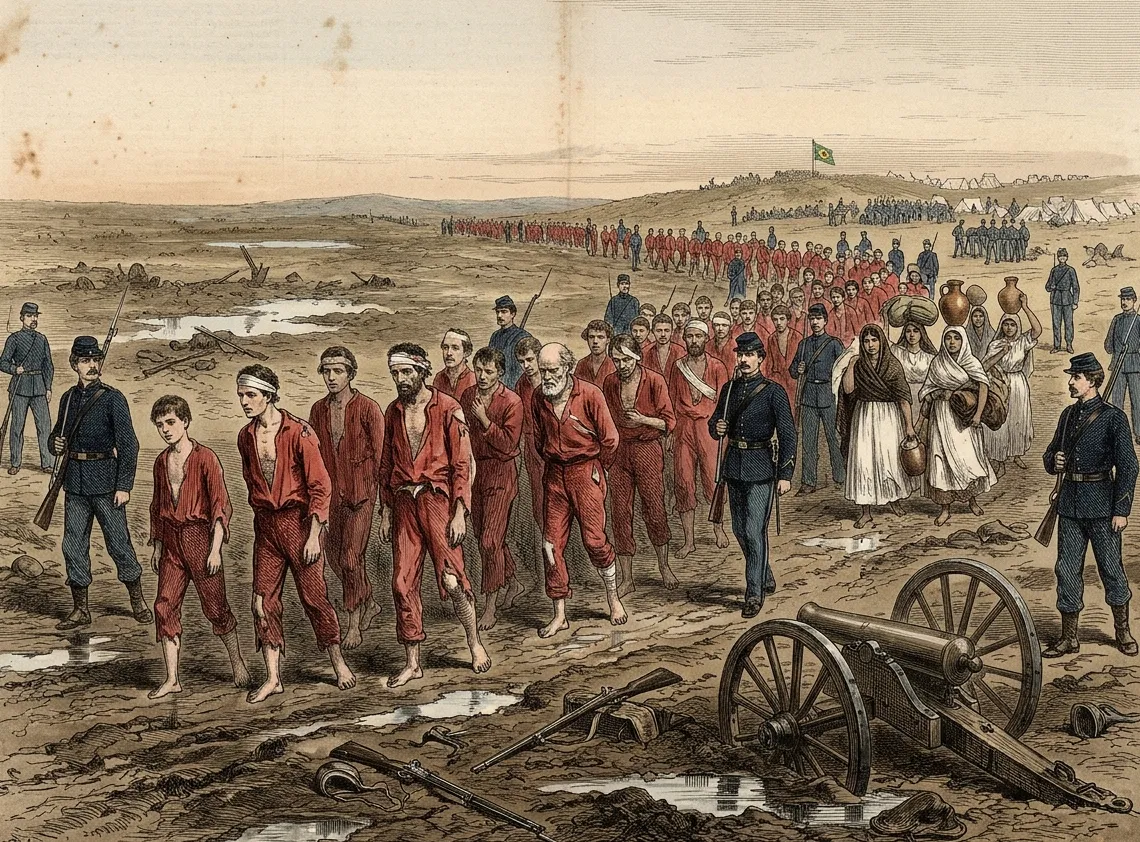
The Brazilian cavalry enveloped the flanks and closed off the rear. There was no way out.
Caballero's division was almost annihilated. Between 3,000 and 3,600 Paraguayan dead were left on the field. More than 1,000 were taken prisoner, almost all of them wounded. According to the historian Francisco Doratioto, only about 200 escaped. Caballero was one of them.
With the troops were women who dug trenches, cooked and tended the wounded. About 300 fell into Brazilian hands. The Argentine soldier José Ignacio Garmendia left testimony of the abuses they suffered after the battle.
Caxias went on to Villeta, on the river, where the fleet could supply his army. Years later, the Brazilian painter Pedro Américo painted Avay on an enormous canvas, finished in 1877.
Itá Ybaté
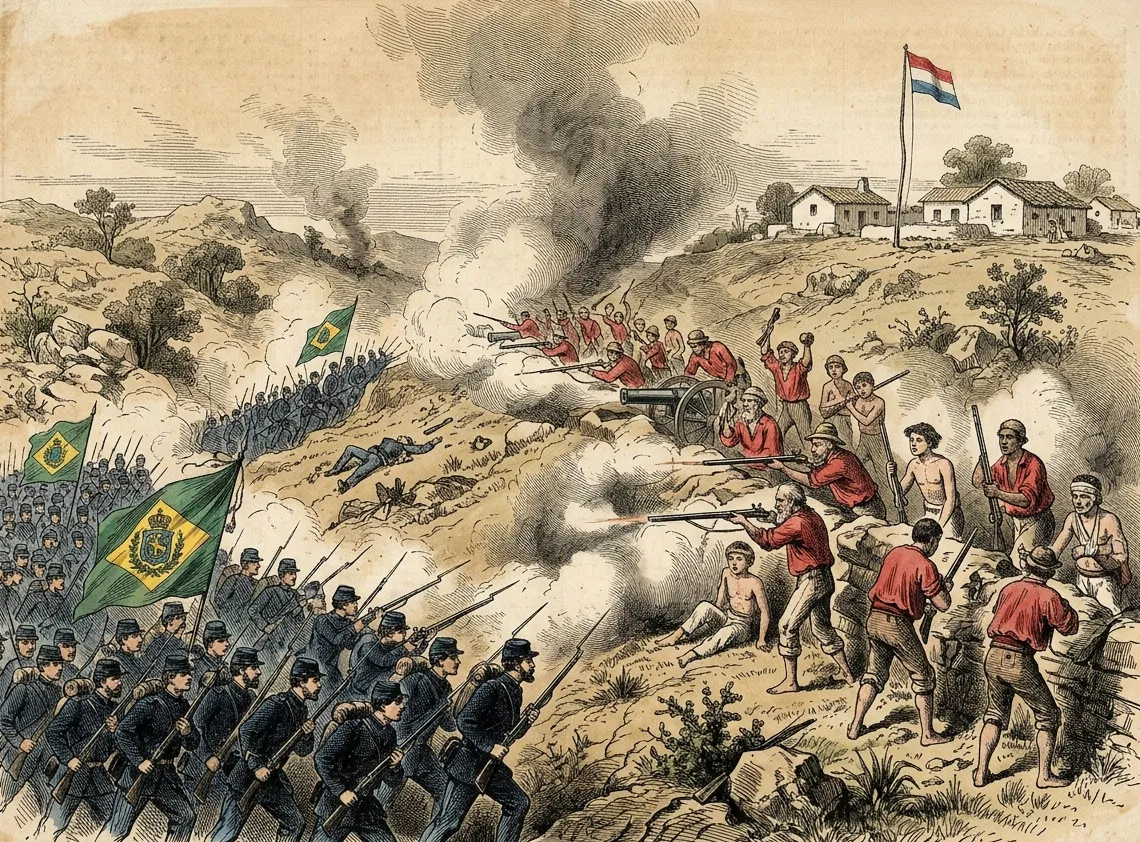
Itá Ybaté was one hill among others: Cumbarity, Acosta, Potrero Mármol. Together they form the Lomas Valentinas, south of Villeta.
López's headquarters stood there, protected by improvised ditches about 60 centimeters wide and deep. With him remained what was left of the army: veterans, old men, invalids, teenagers and children.
On 21 December, Caxias left Villeta at two in the morning. A column under General João Manuel Mena Barreto took the Pikysyry line from behind, while the Argentines feinted from the front. The main Brazilian force attacked the hills and took Cumbarity hill, but at nightfall the trenches of Itá Ybaté were still in Paraguayan hands.
The summons
For three days, Caxias reorganized his troops. Argentines and Uruguayans crossed the Pikysyry line, already taken, and joined the encirclement.
On 24 December a note from the three allied commanders reached the Paraguayan lines: Caxias, the Argentine Juan Andrés Gelly y Obes and the Uruguayan Enrique Castro. They asked López to lay down his arms within twelve hours.
López replied that same afternoon. He recalled that at Yataity Corá, two years earlier, he had proposed peace and the allies had not accepted. He declared himself willing to negotiate an end to the war on honorable terms, but not to surrender: “I am not willing to hear a summons to lay down arms”, he wrote.
27 December
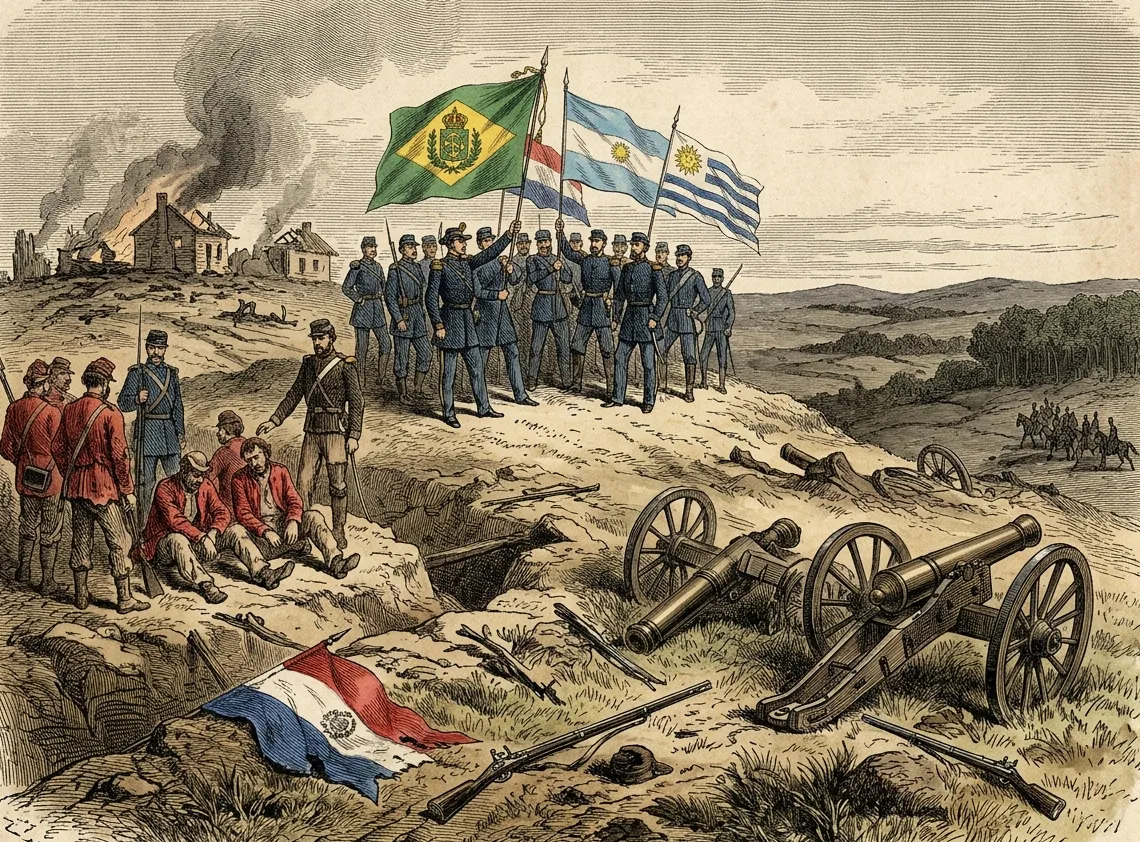
On the 25th and 26th, the allied artillery pounded the hills. On the 27th, at six in the morning, the final assault came.
Brazilians, Argentines and Uruguayans attacked together, and Gelly y Obes's troops entered the trenches. The Paraguayan defense fell apart. Colonel Felipe Toledo died in his last cavalry charge. At the headquarters, the allies found López's archive, which they later published.
But López was not there. With about a hundred men he slipped out through Potrero Mármol, while Caballero covered the retreat with some thirty horsemen. He went on to Cerro León, east of Asunción. The war was not over.
Angostura
Angostura remained, the battery on the river, cut off since the fall of Pikysyry.
Its commander was Lieutenant Colonel George Thompson, the British engineer who had laid out much of the Paraguayan defenses. After a prolonged bombardment and long negotiations, Thompson capitulated on 30 December with the whole garrison.
The following year, in London, Thompson published The War in Paraguay, one of the most cited eyewitness accounts of the conflict.
The toll
In three weeks, López's last great army ceased to exist.
- 1,200 Paraguayan casualties at Ytororó
- 3,000 to 3,600 Paraguayan dead at Avay
- more than 20,000 Paraguayan casualties in December, according to Doratioto
- 10,079 Brazilian casualties in December, according to Doratioto
Brazil had 2,099 dead and 7,980 wounded in the whole campaign, according to Doratioto. On the Paraguayan side there were no reports: the figures come from witnesses and from the victors. Among the fallen at Lomas Valentinas were old men and children; Doratioto gathers accounts of boys wearing false beards to look older.
After December
On 1 January 1869, a Brazilian division entered Asunción. The city was almost empty.
In the following days it was sacked: houses, ministries, the López palace. Caxias arrived on 5 January and, on the 14th, in his order of the day No. 272, declared the war over. Ill and exhausted, he gave up command on the 18th and left the next day.
But López was still free. In the Cordillera, between Azcurra and Piribebuy, he began to gather another army from the country's last men, old men and children. The war would last fourteen more months.
An incomplete victory
December 1868 was Caxias's masterpiece and the end of the Paraguayan army as a force able to give battle.
A road of palms across the marsh avoided another Curupayty. But Ytororó and Avay showed something else: poorly armed soldiers, many of them almost children, holding back an army three times larger for days on end. And López's escape turned a decisive victory into a war with no end in sight.
Sources
- Brazilian Army magazine: study of the Piquissiri maneuver. Line of about 9 km, Chaco road (23 days, Rufino Galvão, caranday palms, telegraph), order of the day No. 272.
- Brazilian Army: Verde-Oliva magazine and a BDEx study on Ytororó and Avaí. Osório's wound, citing Estigarribia; assaults on the bridge.
- Revista Temporalidades (UFMG): “Morrer em silêncio”, on the dead of the Dezembrada. Figures from Francisco Doratioto (Maldita guerra, 2002), Centurión and Thompson.
- Terry D. Hooker, The Paraguayan War (2008), via English Wikipedia: Chaco road, forces and casualties at Ytororó, Avay and Lomas Valentinas, surrender of Angostura.
- Helio Vera, La guerra contra la Triple Alianza, Portal Guaraní: landing, Ytororó, Avay.
- Efraím Cardozo, Hace cien años, volume IX, Portal Guaraní: the Pikysyry line and the Itá Ybaté headquarters in September 1868.
- ABC Color: monuments of Ytororó, Avay and Lomas Valentinas (2021); “Citas y hechos” (2021); horseback ride of the Pikysyry campaign (2024).
- Última Hora: women at the battle of Avay (Centurión, Garmendia); “Las últimas navidades del Mariscal López” (summons and reply).
- George Thompson, La guerra del Paraguay (Buenos Aires, 1869), Biblioteca Brasiliana Guita e José Mindlin.
- Wikipedia in Portuguese (Campanha do Piquissiri, Batalha de Lomas Valentinas) and in English (sack of Asunción, San Fernando trials, Gurjão, Argolo), as cross-checking support.
Disputed points
- Length of the Chaco road: 10.7, 11 or 25 km. Date of the landing at San Antonio: 3 or 5 December.
- Ytororó: Paraguayan force of 4,000 to 6,000; Paraguayan casualties of 1,200 to 1,446; Brazilian casualties of 1,860 to almost 3,000. How many times the bridge changed hands.
- Avay: start time and duration (4 or 5 hours); Paraguayan survivors (fewer than 50 or about 200); Brazilian casualties of 1,663 to 4,000.
- Lomas Valentinas: Paraguayan force of 3,000 to 9,800; Paraguayan casualties of 3,000 to 8,000; López's escort, 90 or 100 men; why there was no pursuit.
- Angostura: 1,300, 1,700 or 1,907 surrendered.
- Paraguayan casualties in the whole campaign: more than 20,000 according to Doratioto, cited by another author; no Paraguayan reports.
- Words of Caxias, Gurjão and Argolo: Brazilian military tradition.
- Commander of the first troops to enter Asunción.
Eight months later, on 12 August 1869, the allied army attacked Piribebuy, López's new capital in the Cordillera. Four days later came Acosta Ñu.
Open in the illustrated encyclopedia ›
Guerra Guasu Collection · by José Báez · Free for everyone · Home · Privacy