TATAYIBÁ
The trap that did not close · 21 October 1867 · Humaitá campaign
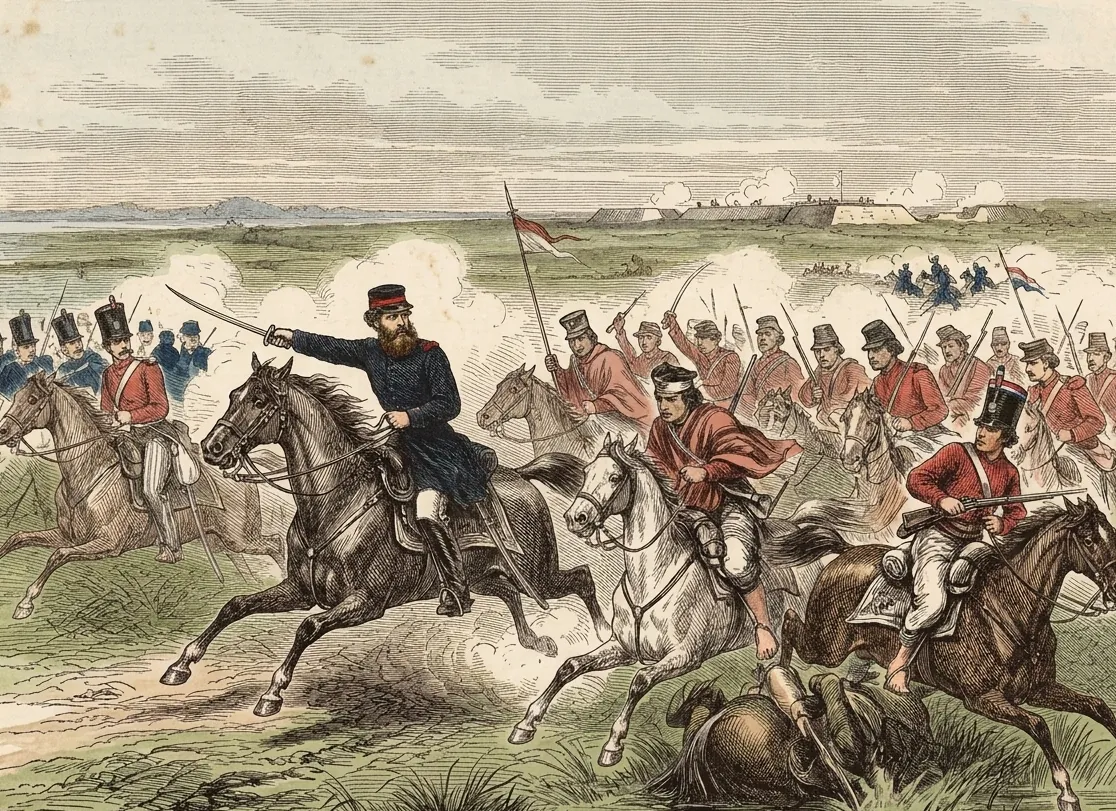
Battle card
| Date | 21 October 1867 | |
|---|---|---|
| Location | Tatayibá, one league from Humaitá | |
| War | Triple Alliance · Humaitá campaign | |
| Duration | 3 or 4 hours ‡ | |
| Result | Brazilian victory. The Paraguayan cavalry breaks the encirclement and falls back to Humaitá. | |
| Paraguay | Empire of Brazil | |
| Commanders | Major Bernardino Caballero Captain Ángel Castillo | Marquis of Caxias (plan) General José Joaquim de Andrade Neves (cavalry) ‡ |
| Forces | Between 1,000 and 1,700 horsemen ‡ | About 5,000 horsemen |
| Weapons | Lances, sabers and flintlock carbines | Rifled carbines and sabers |
| Casualties | 400 to 583 dead 140 to 178 prisoners ‡ | 10 dead and 113 wounded (acknowledged) |
‡ Figure disputed among sources. The details are on each page and at the end of the booklet.
A note to the reader
Each page carries a mark that shows what kind of information you are reading.
The plates in this work are contemporary illustrations, made in the manner of period engravings. They are not original documents.
A besieged fortress
In October 1867, Humaitá was the key to the Paraguay River and the heart of the Paraguayan defense.
The armies of the Triple Alliance surrounded the fortress by land. Inside were soldiers, cannons and thousands of horses that needed to eat every day.
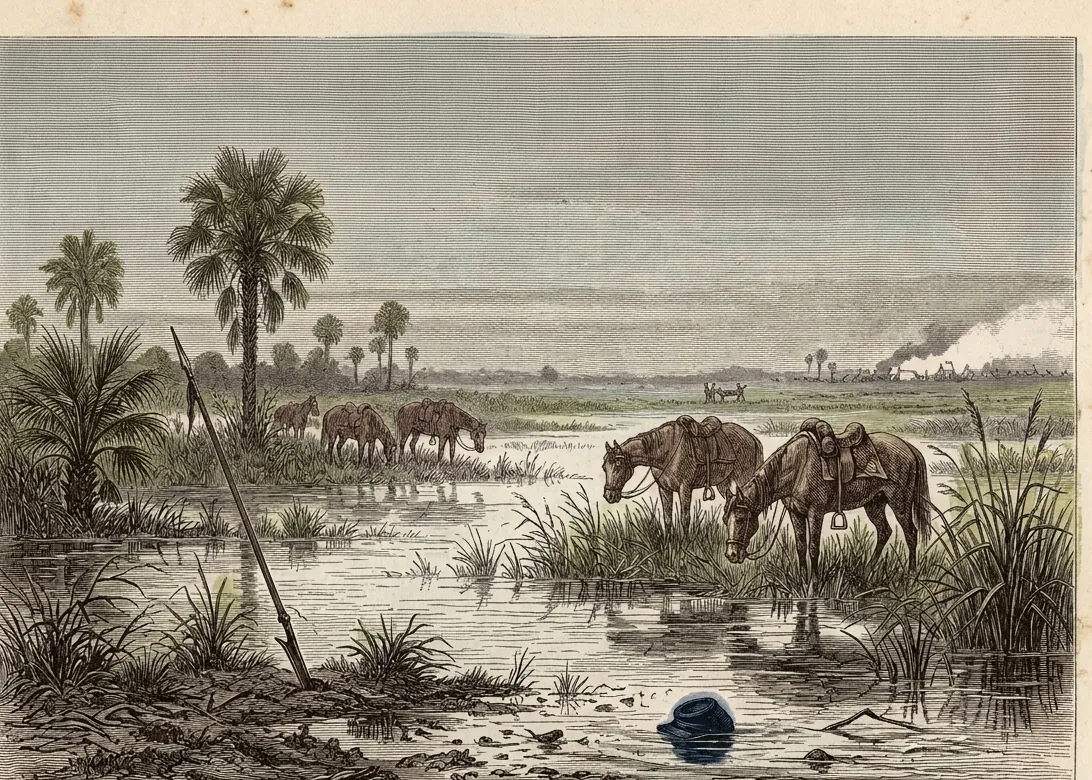
One league to graze
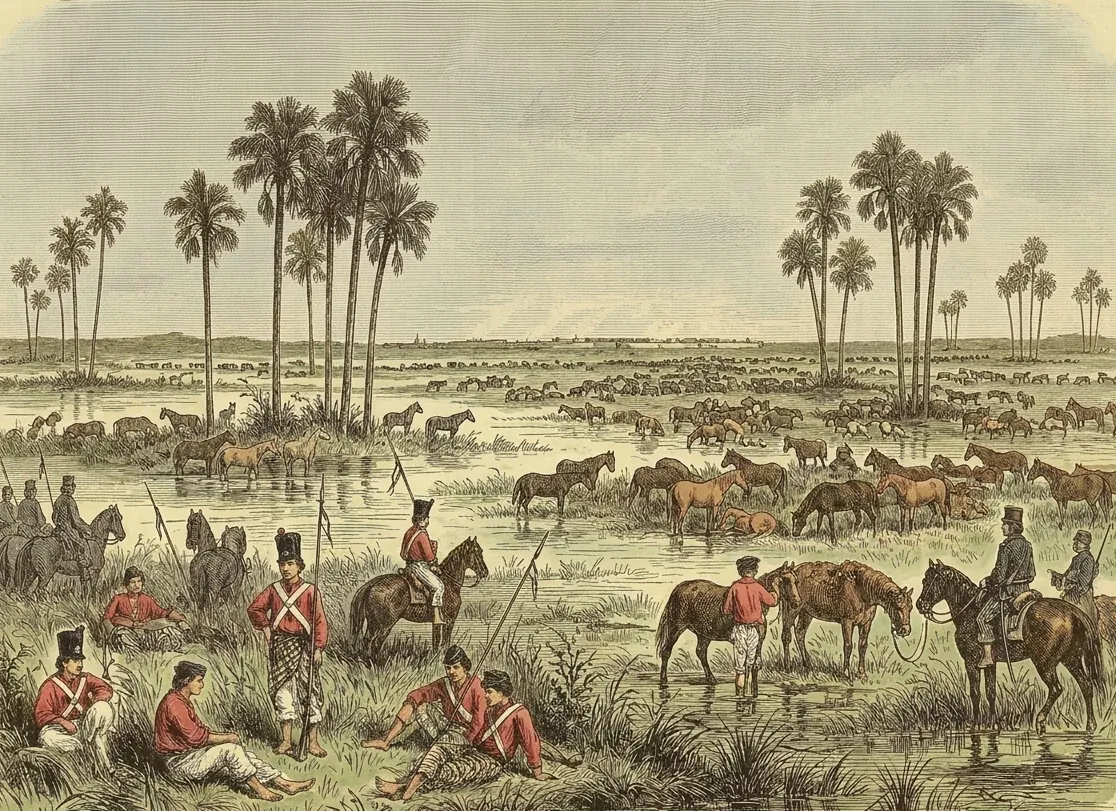
Every day, the Paraguayan cavalry took the horses out to graze one league from the fort, at a place called Tatayibá.
It was a routine. And a routine repeated in front of the enemy can be studied.
Caxias's trap
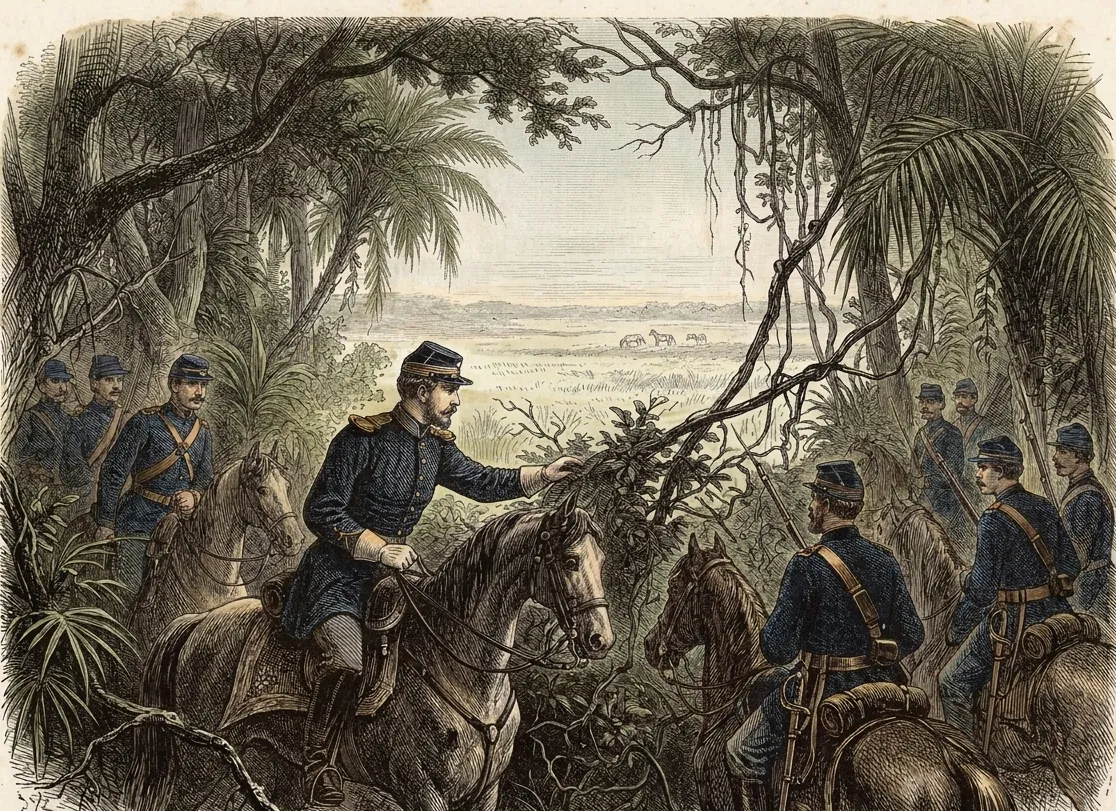
The Marquis of Caxias, commander of the Brazilian forces, prepared an ambush right there.
According to the historian Helio Vera, he gathered about five thousand horsemen and hid them in the woods, near the place where the Paraguayan horses grazed. On the Paraguayan side there were between one thousand and seventeen hundred horsemen.
Castillo falls
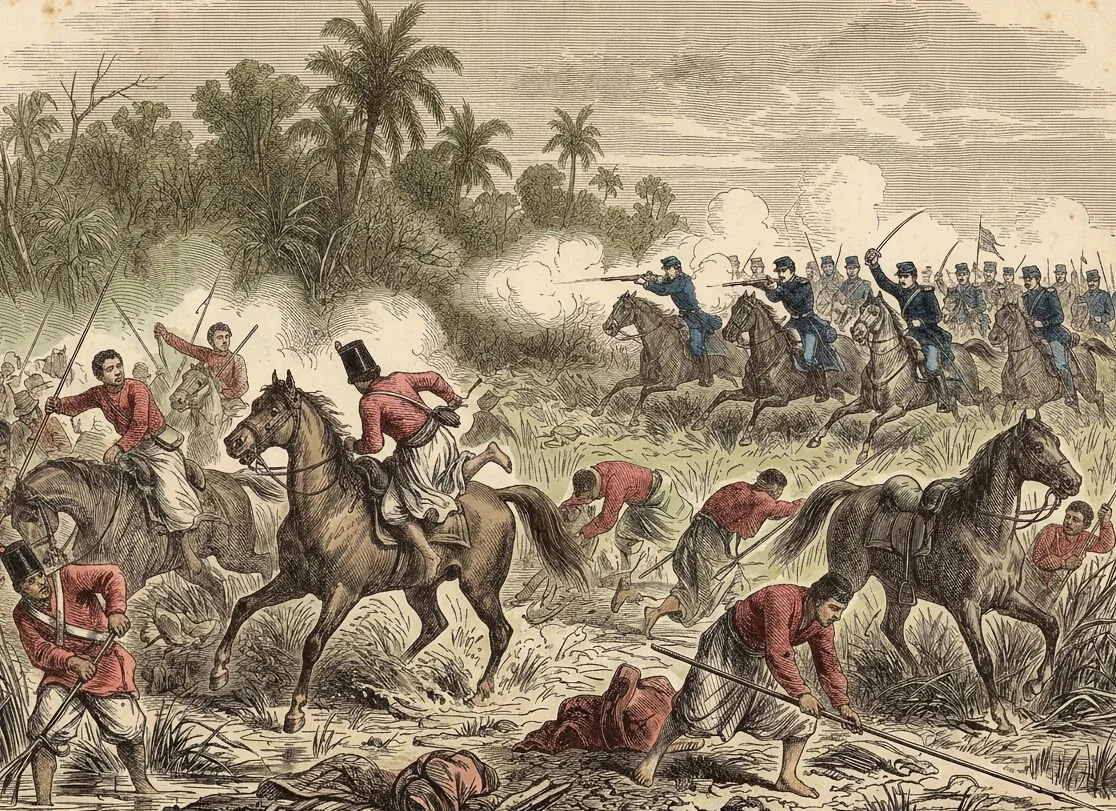
The first blow fell on the regiment of Captain Ángel Castillo.
His force was surprised and surrounded.
A 28-year-old commander
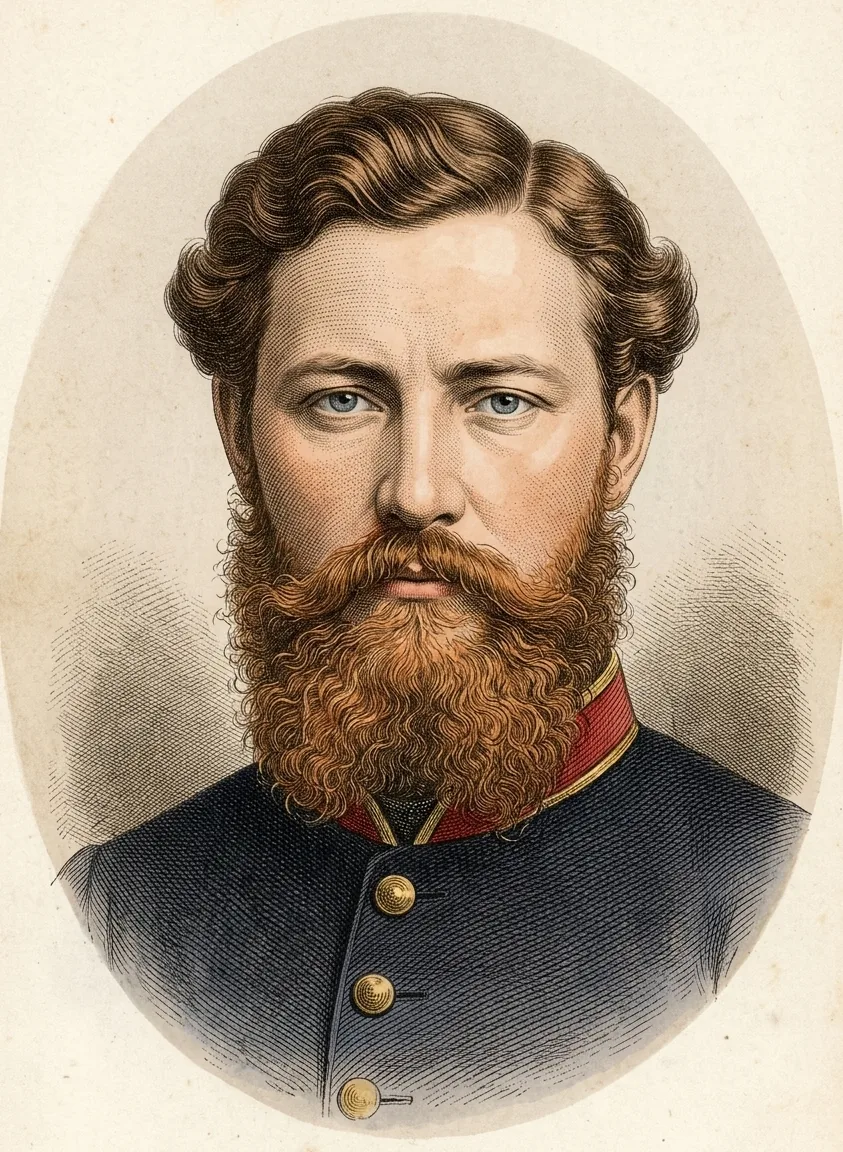
At the head of the Paraguayan cavalry was Bernardino Caballero.
He was born in 1839: he was 28 years old. Thirteen years later he would be president of Paraguay.
Two hundred meters
The Paraguayan flintlock muskets had an effective range of about 200 meters. The Brazilian weapons, twice that.
To fight, the Paraguayans had to cross that distance under fire, unable to reply. Their only way out was to reach hand-to-hand combat, with lance and saber.
One charge after another
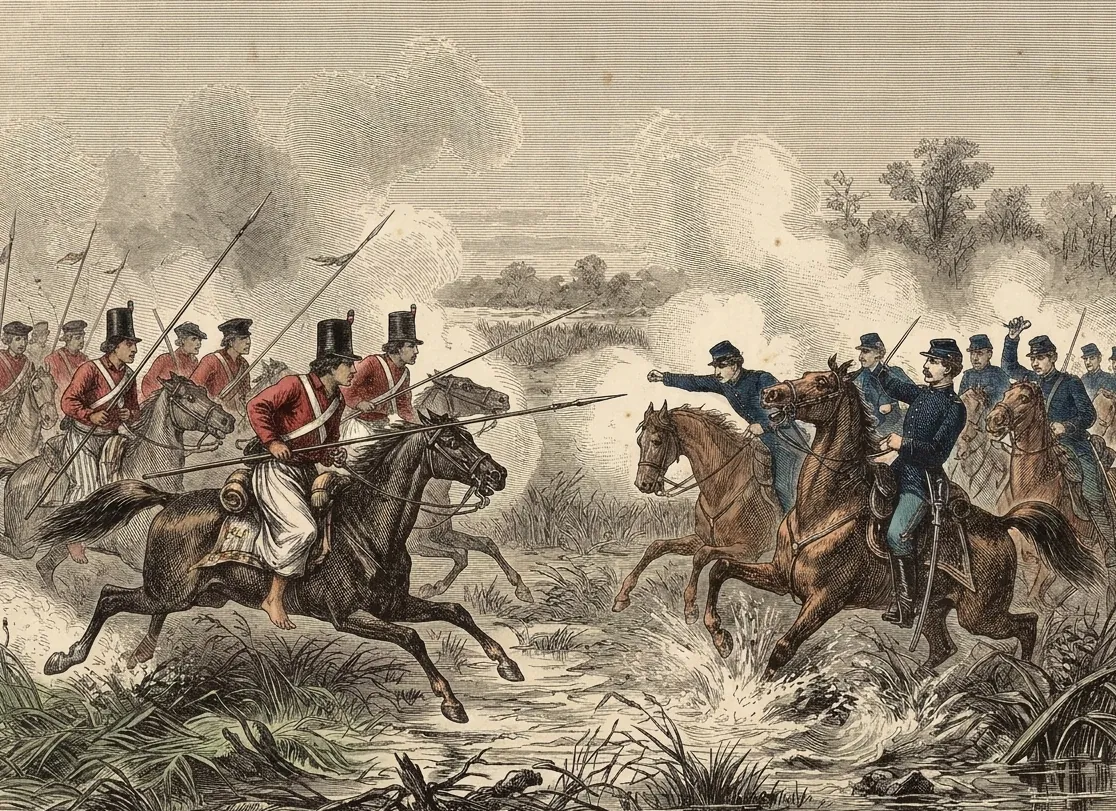
Caballero regrouped his men and repelled several charges.
He even forced the Brazilians to fall back. The fighting went on for hours.
The encirclement
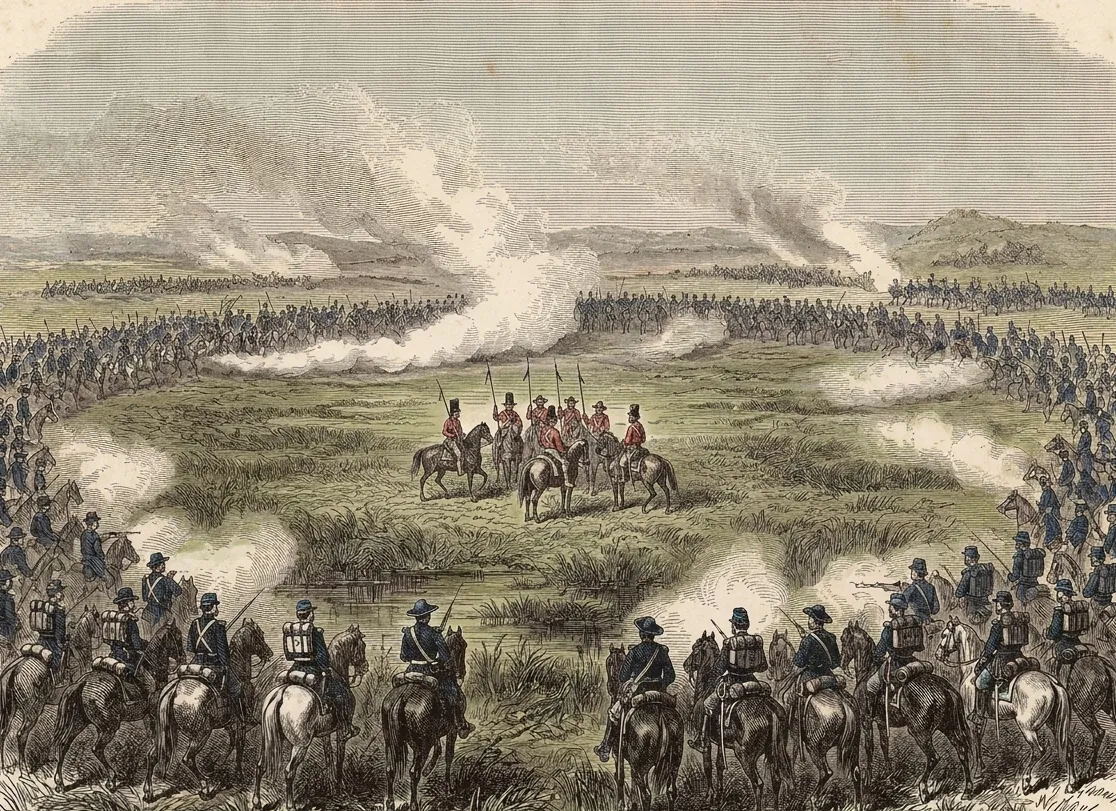
Then more Brazilian regiments appeared in the rear.
The Paraguayan cavalry was surrounded, far from the fort.
The breakout
According to the account of Juan E. O'Leary, Caballero charged head-on and broke the encirclement on the left flank.
The men who got out fell back toward Humaitá. According to other sources, the fortress batteries covered that retreat.
The toll
Almost half of the Paraguayan force was left on the field.
- 400 to 583 Paraguayan dead
- 140 to 178 Paraguayan prisoners
- 10 acknowledged Brazilian dead
- 113 acknowledged Brazilian wounded
Paraguayan sources speak of about 400 dead and 140 prisoners; Brazilian sources, of 583 dead and 178 prisoners. On the Brazilian side, ten dead and 113 wounded were acknowledged.
The medal
On 24 October 1867, three days later, Marshal Francisco Solano López decreed a medal for the regiments that fought at Tatayibá: gold for the commanders, silver for the officers and copper for the troops.
Four days later, Caballero was promoted to lieutenant colonel.
Sources
- Helio Vera, La guerra contra la Triple Alianza, Portal Guaraní. Date, distance, five thousand horsemen, weapon range, hand-to-hand combat.
- Osvaldo Bergonzi, Bernardino Caballero, el auténtico, Portal Guaraní. Reproduces the account of Juan E. O'Leary (La Patria, 24 July 1908): head-on charge, breakout on the left flank, “almost half” of the force, decree of 24 October, promotion.
- Nancy Pérez, Los oficiales en la Guerra de la Triple Alianza, Portal Guaraní. Duration of four hours.
- Batalla de Tatayibá, Spanish and English Wikipedia. Caxias's ambush, figures, death of Castillo, encirclement, retreat covered by the batteries, casualties acknowledged by Brazil.
Disputed points
- Time of the attack: at night according to Spanish Wikipedia; O'Leary's account suggests the clash took place by day. None of the sources consulted gives the time.
- Paraguayan force: between 1,000 and 1,700. Paraguayan dead: 400 or 600. Duration: 3 or 4 hours.
- Death of Castillo: stated by some sources, not mentioned by O'Leary.
- Caballero's rank: major according to the decree of 24 October; lieutenant colonel according to another source.
Four months after Tatayibá, at dawn on 19 February 1868, the Brazilian ironclads forced the passage of Humaitá.
Open in the illustrated encyclopedia ›
Guerra Guasu Collection · by José Báez · Free for everyone · Home · Privacy