TUYUTÍ
The blow that almost changed the war · 24 May 1866 · Humaitá campaign
Battle card
| Date | 24 May 1866 | |
|---|---|---|
| Location | Tuyutí, between Estero Bellaco and Estero Rojas | |
| War | Triple Alliance · Humaitá campaign | |
| Duration | From around midday to about 4 p.m. | |
| Result | Allied victory. The Paraguayan attack is repelled. | |
| Paraguay | Brazil, Argentina and Uruguay | |
| Commanders | Marshal Francisco Solano López (plan) Vicente Barrios (right column) José Eduvigis Díaz and Hilario Marcó (center) Francisco Isidoro Resquín (cavalry, left) | Bartolomé Mitre (commander in chief) Manuel Luís Osório (Brazilians) Venancio Flores (vanguard) Wenceslao Paunero (Argentine corps) Colonel Emílio Mallet (artillery) General Antônio de Sampaio (3rd Division) |
| Forces | 23,000 to 26,000 men ‡ | 32,000 to 35,000 men ‡ |
| Artillery | Disputed: from fewer than 10 to 48 pieces ‡ | About 60 cannons; 28 to 30 of them under Mallet, rifled |
| Weapons | Flintlock muskets; only 3 battalions with percussion muskets. Cavalry with lance, saber and flintlock carbine | Rifled muskets and carbines; La Hitte rifled artillery |
| Casualties | About 13,000: 6,000 dead and 7,000 wounded ‡ | About 4,250 according to the military reports; 8,000 according to another source ‡ |
‡ Figure disputed among sources. The totals and the breakdown by country vary widely depending on who is counting; the most cited figure is used.
A note to the reader
Each page carries a mark that shows what kind of information you are reading.
The plates in this work are contemporary illustrations, made in the manner of period engravings. They are not original documents.
The largest battle
Some battles are not measured only in victories. They are measured by what they came close to changing.
Tuyutí, on 24 May 1866, is considered the largest pitched battle in the history of South America. That is how it is described by Argentina's National Historical Museum, the Brazilian Army and much of Paraguayan historiography.
The allied camp
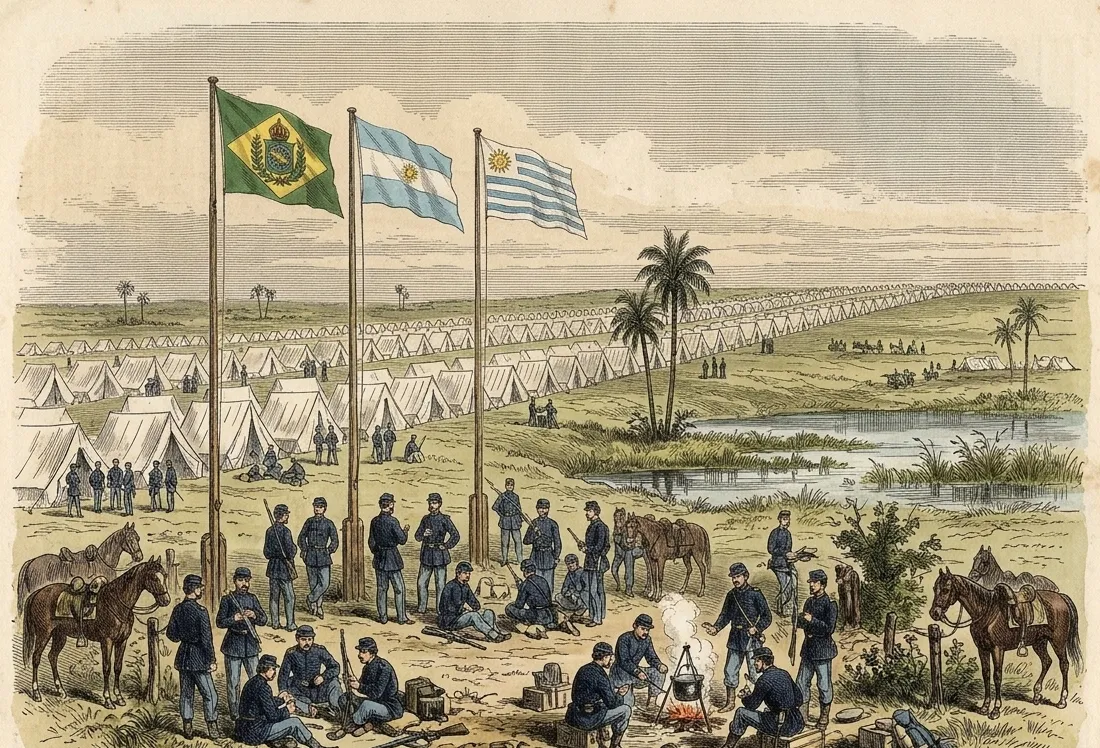
In April 1866, the allies crossed the Paraná and entered Paraguayan territory at Paso de la Patria.
On 2 May, Díaz struck them at Estero Bellaco. Weeks later, the allied army camped at Tuyutí, on a gentle rise about four kilometers by two and a half, between Estero Bellaco to the south and Estero Rojas to the north.
In command were Bartolomé Mitre, the Brazilian Manuel Luís Osório and the Uruguayan Venancio Flores. More than thirty thousand men and about sixty cannons. Confidence.
Strike first
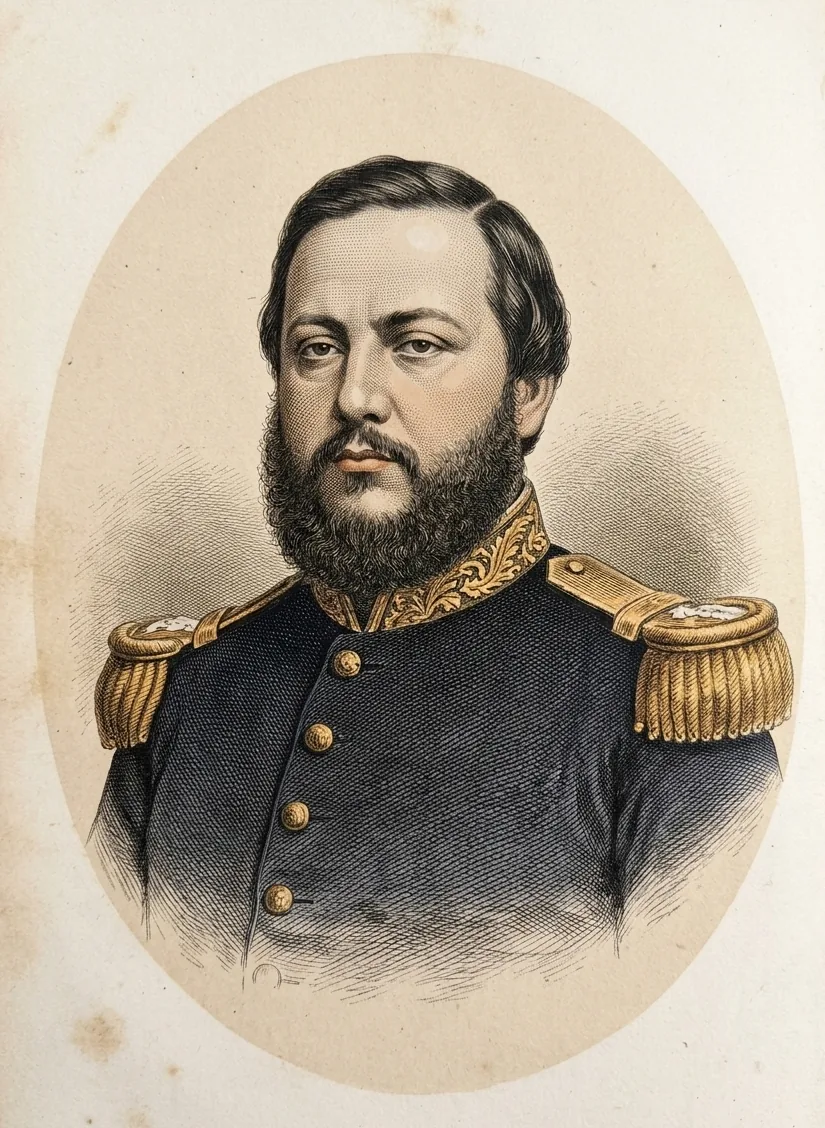
Marshal Francisco Solano López learned that the allies planned to attack on 25 May.
He decided to move one day ahead. No waiting, no falling back: strike first, with everything, and take the camp by surprise.
His headquarters was at Paso Pucú, north of Estero Rojas.
Three columns, a single moment
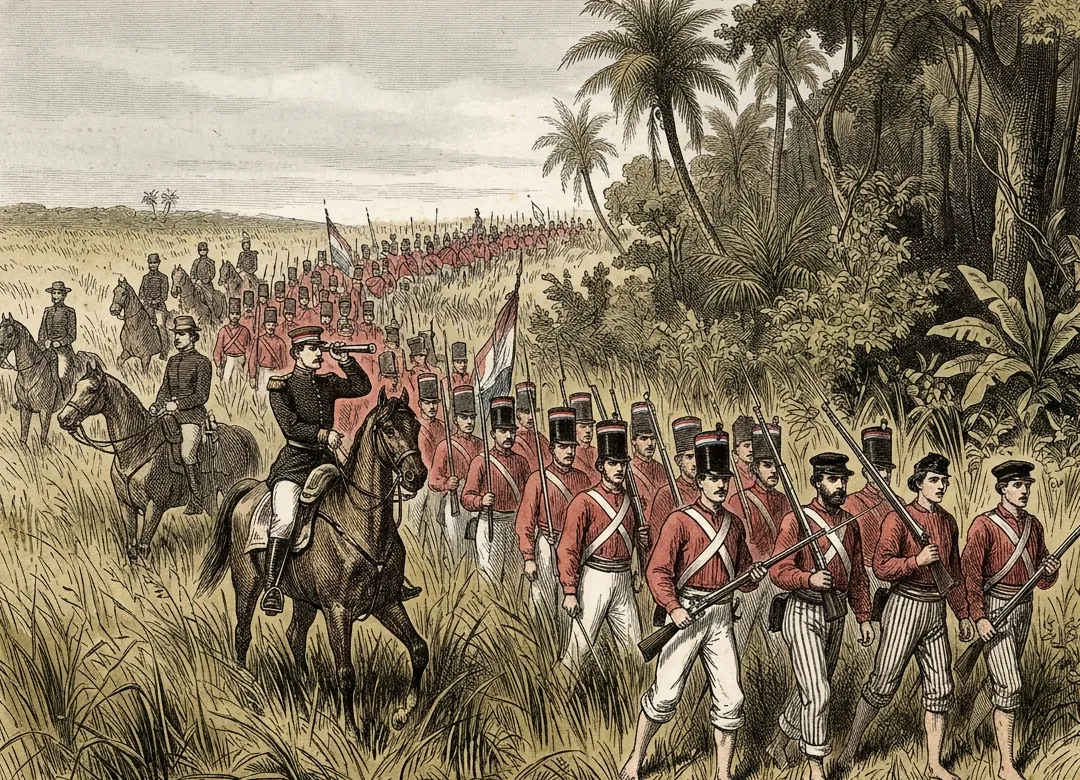
The plan was to attack at the same time from three directions.
In the center, José Eduvigis Díaz and Hilario Marcó would go straight at the camp. On the right, Vicente Barrios would cross the Sauce woods and Potrero Piris to fall on the allied left flank, where the Brazilians were. On the left, Francisco Isidoro Resquín would charge with the cavalry against the right flank, where the Argentines were.
The troops set out at midnight. The attack was planned for dawn.
The signal
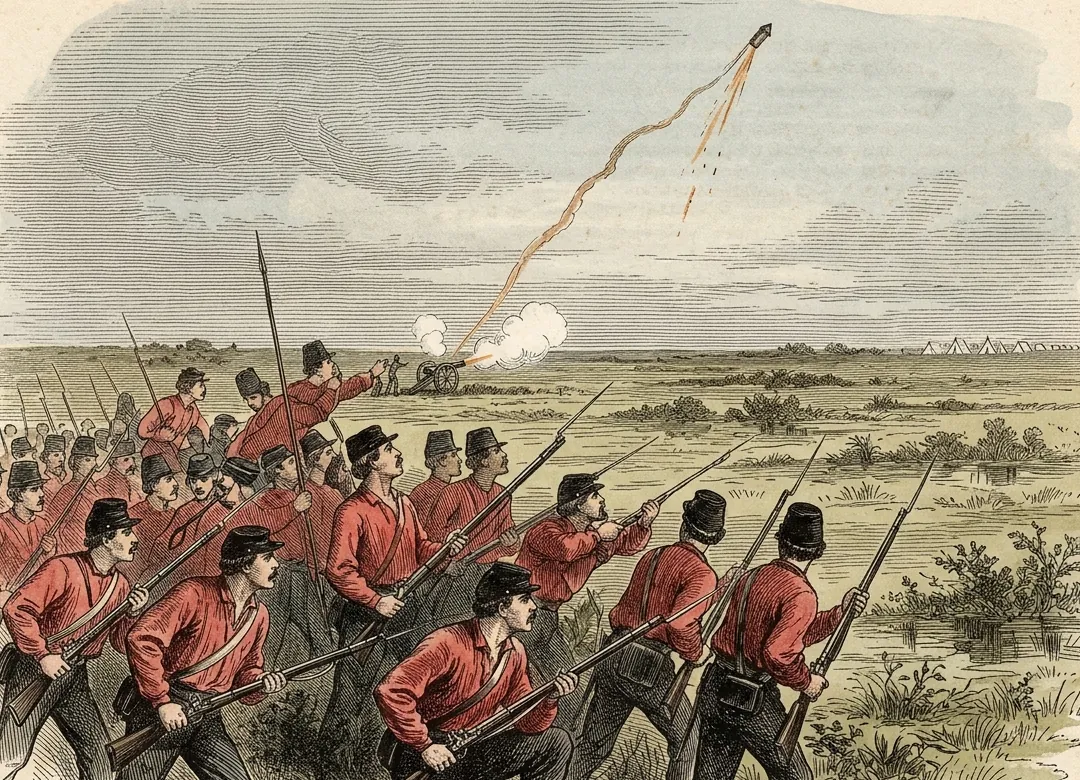
But dawn passed, and the signal did not come.
Barrios's column took much longer than planned to cross the woods and arrived exhausted. Around midday, at 11:55 according to one source, a Congreve rocket rose into the sky. It was the signal.
The blow
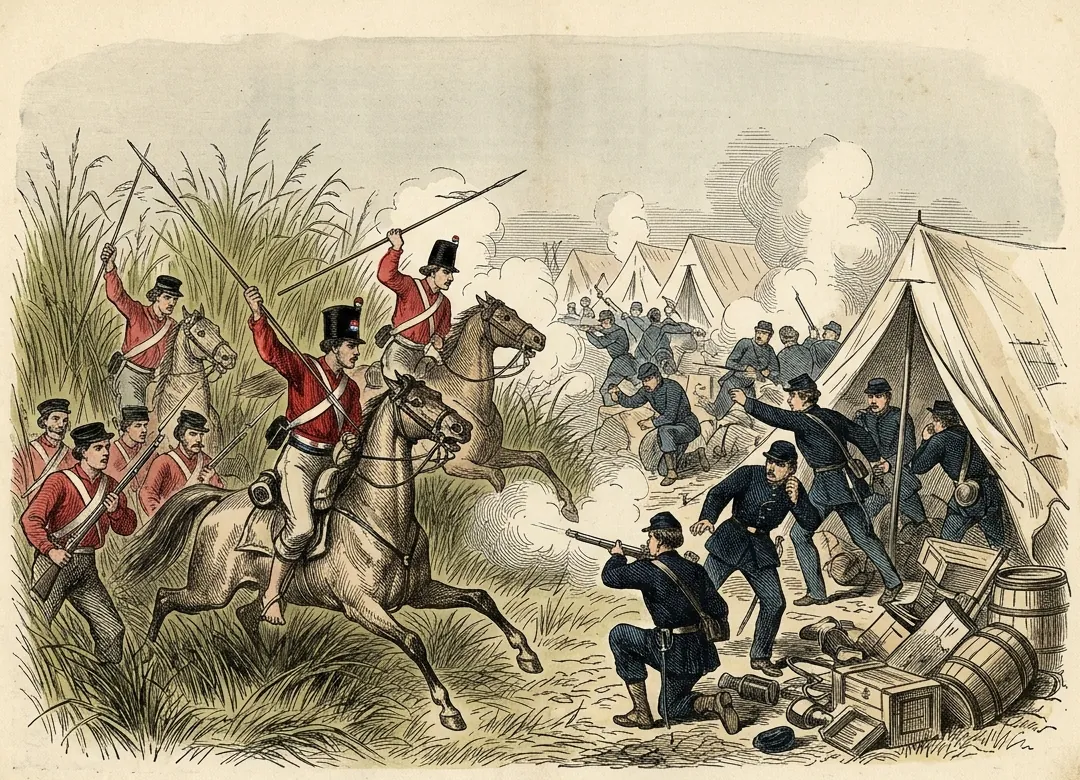
The Paraguayan charge fell on Tuyutí.
The first blow struck the center and drove back Flores's Uruguayans and battalions of Brazilian Voluntários da Pátria. The cavalry crossed the tall grass and the gullies; the red-shirted infantry advanced with the bayonet.
At times, the allied front fell into disorder. The surprise was working.
Mallet's ditch
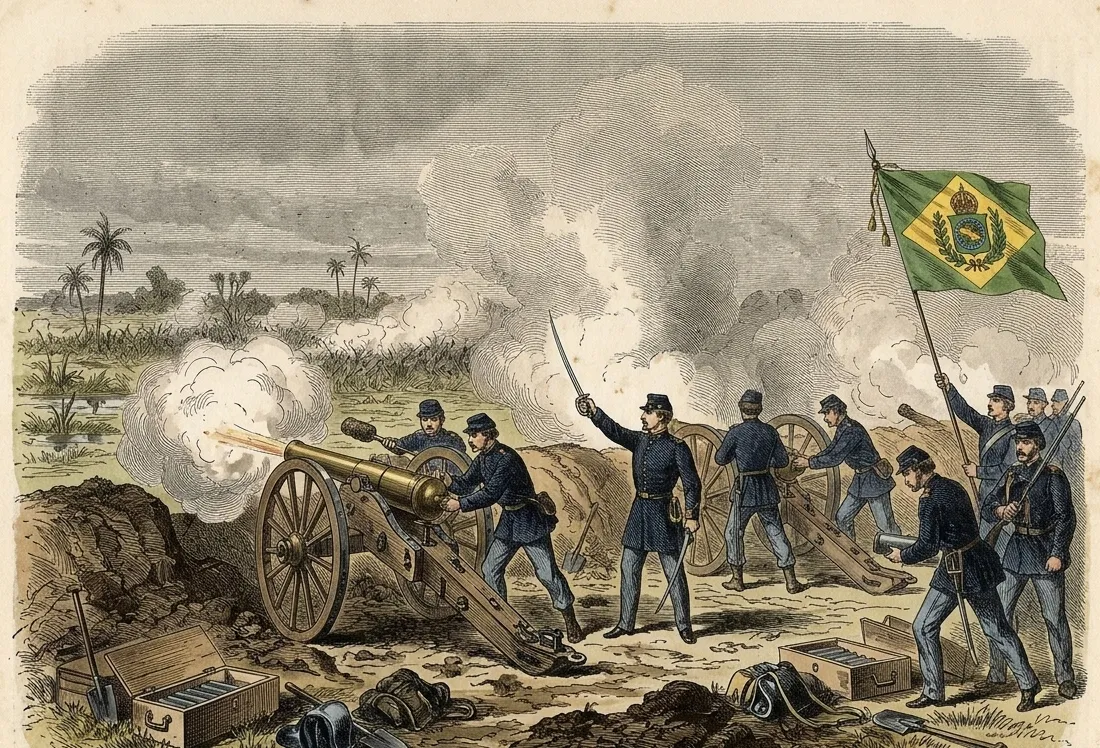
Then came the obstacle no one had seen.
In front of his guns, the Brazilian colonel Emílio Mallet had secretly had a ditch dug. His artillery regiment, with about thirty rifled pieces, fired so fast that it was nicknamed the “revolver artillery”.
The attackers were stopped at the ditch, within canister range. The field became smoke, fire and mud.
Marshes and woods
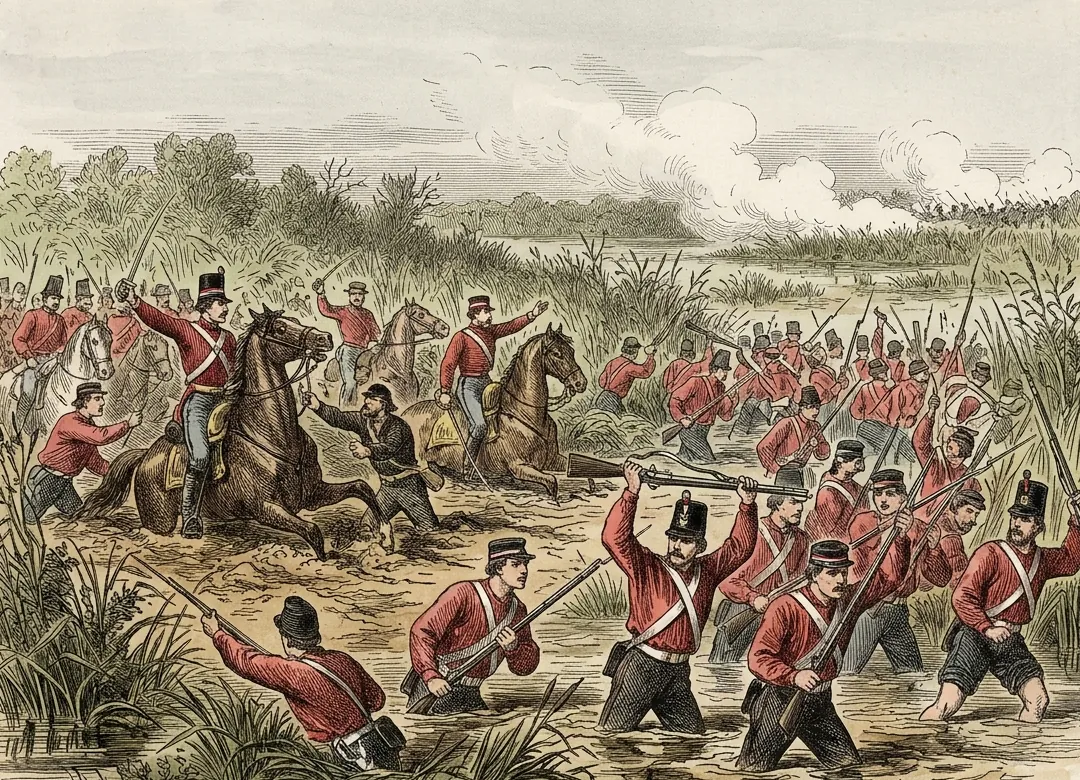
The terrain did the rest.
Marshes, lagoons, dense woods and tall grass, almost without paths, broke the order of the columns. Barrios arrived late and ran into the division of General Antônio de Sampaio. Osório threw in his reserves, the cavalry among them, and the Paraguayans were enveloped.
Sampaio received several wounds. He died on 6 July, aboard the steamer Eponina.
Resquín's flank
On the left, Resquín's cavalry defeated the Argentine cavalry at the Yataity Corá and Lequizamón crossings.
But it failed to envelop the allied flank. According to the memoirs of Colonel Silvestre Aveiro, Resquín later explained that he had taken the wrong road, and López called him a coward.
Attrition
Shots, shouts, confusion.
The offensive turned into attrition: hand-to-hand fighting in the tall grass, charges that fell apart against the artillery. Around four in the afternoon, according to the engineer George Thompson, the firing stopped.
The toll
It was the bloodiest day of the war.
- 6,000 Paraguayan dead
- 7,000 Paraguayan wounded
- 4,248 allied casualties according to the military reports
- 17,000 to 20,000 total casualties, depending on the source
In one afternoon Paraguay lost a huge part of its army. The allies were also badly hit: without enough horses, they could not pursue the defeated.
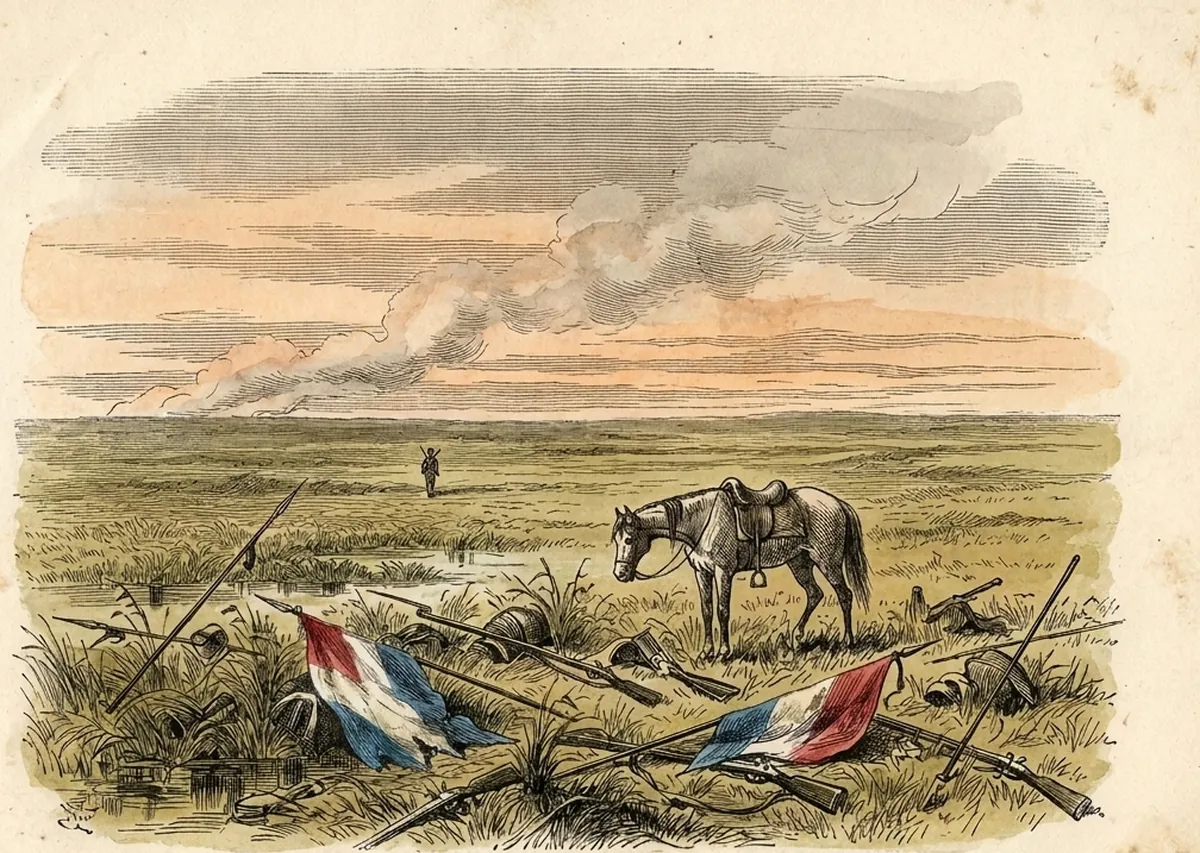
After Tuyutí
Tuyutí did not break the war, but it changed it.
Paraguay lost its veteran army and the elite of its cavalry, and never recovered from that blow. It was its last great attack until November 1867. It went from offensive to resistance.
The allies stayed in the camp until September. There, according to the historian Terry Hooker, about ten thousand men died of disease. Then came Boquerón and Sauce in July, Curuzú in September and, on 22 September, Curupayty.
Among the Argentine soldiers was Cándido López, who years later painted several episodes of the battle.
Armies and decisions
At Tuyutí, armies clashed.
And so did decisions: attacking one day early, crossing woods without paths, digging a ditch in secret. Each one weighed as much as the muskets.
Sources
- ABC Color: “Tuyutí, la gran batalla”; the weapons of the Paraguayan soldiers.
- Brazilian Army magazine and an IHGRGS article: forces, Mallet's artillery, Sampaio's division.
- Teodoro Delgado, study in Dialnet: the plan of the three columns and Barrios's delay.
- Última Hora: “El amigo del Mariscal”, Silvestre Aveiro's memoirs on Resquín.
- Battle of Tuyutí and its order of battle, English Wikipedia: forces by country, time of the signal, casualties according to Fragoso and Murad.
- Museo Histórico Nacional (Argentina): works by Cándido López on Tuyutí.
- La Nación (Paraguay), Primera Edición (Argentina) and Infodefensa: figures and alternative versions.
Disputed points
- Forces: 23,000 to 26,000 Paraguayans; 32,000 to 50,000 allies depending on the source (the most cited, 32,000 to 35,000).
- Paraguayan artillery: from fewer than 10 to 48 pieces.
- Paraguayan casualties: from 13,000 to 20,000. Allied casualties: 4,250 or 8,000.
- The cannon shot alongside the signal rocket.
- The positions of Díaz and Marcó in the attack.
Four months after Tuyutí, at Curupayty, the allied army ran into a trench.
Open in the illustrated encyclopedia ›
Guerra Guasu Collection · by José Báez · Free for everyone · Home · Privacy