Cerro Corá
The end of the war · 1 March 1870 · Amambay campaign
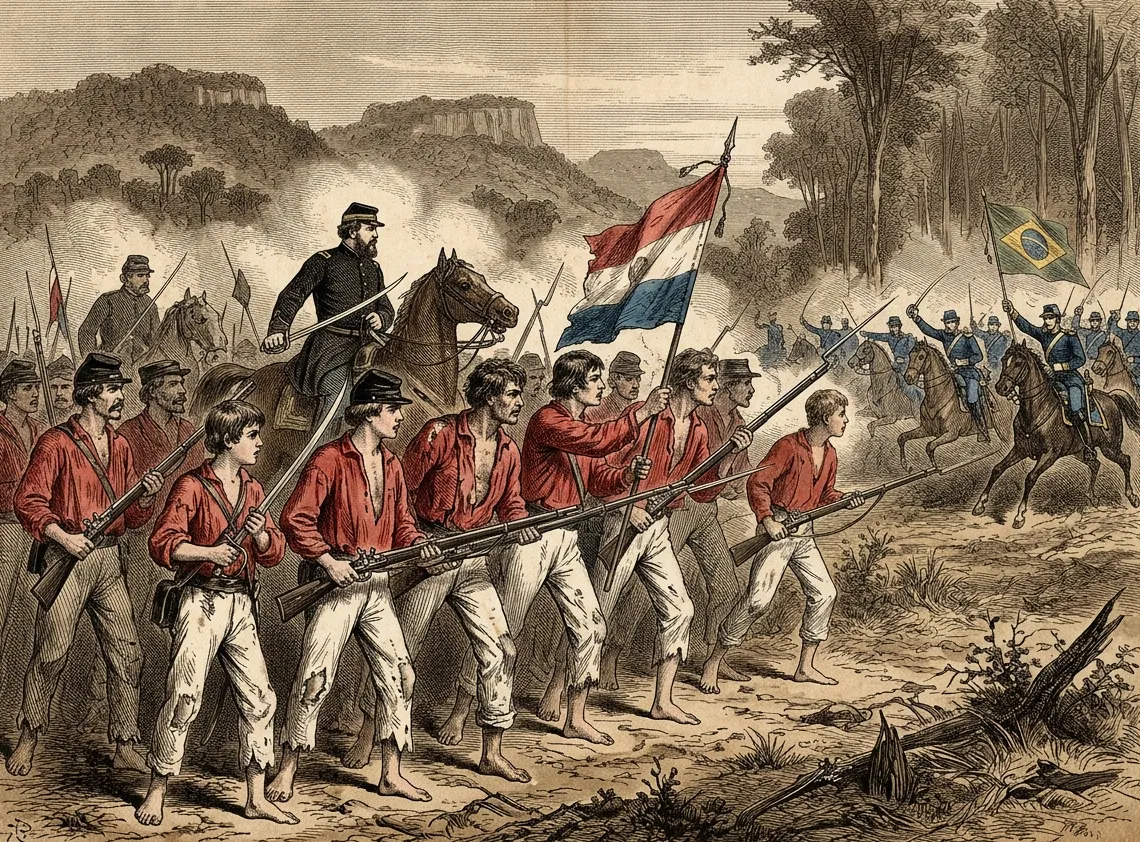
Battle card
| Date | 1 March 1870 | |
|---|---|---|
| Location | Cerro Corá, between the Aquidabán River and the Aquidabán-nigüí stream (Amambay) | |
| War | Triple Alliance · Amambay campaign | |
| Duration | From dawn to midday; the clash in the camp, about 15 minutes ‡ | |
| Result | Brazilian victory. Marshal López dies and the war ends. | |
| Paraguay | Empire of Brazil | |
| Commanders | Marshal Francisco Solano López General Francisco Roa Colonel Juan Crisóstomo Centurión | General José Antônio Correia da Câmara Colonel João Nunes da Silva Tavares, “Joca” (center) Lieutenant Colonel Francisco Antônio Martins (Tacuara ford) |
| Forces | 412 officers and soldiers, in a camp of about 500 people ‡ | Between 2,000 and 2,600 men ‡ |
| Weapons | Old muskets, lances and sabers; fewer than a hundred musketmen according to one source. Two cannons at the Tacuara ford | Spencer repeating carbines in part of the cavalry, rifled muskets, lances and sabers |
| Casualties | Over 100 dead About 240 prisoners, civilians among them ‡ | 7 wounded |
‡ Figure disputed among sources. The Paraguayan figures come from a count made the day before; the Brazilian ones, from Câmara's reports.
A note to the reader
Each page carries a mark that shows what kind of information you are reading.
The plates in this work are contemporary illustrations, made in the manner of period engravings. They are not original documents.
The last camp
On 1 March 1870, at Cerro Corá, the War of the Triple Alliance came to an end.
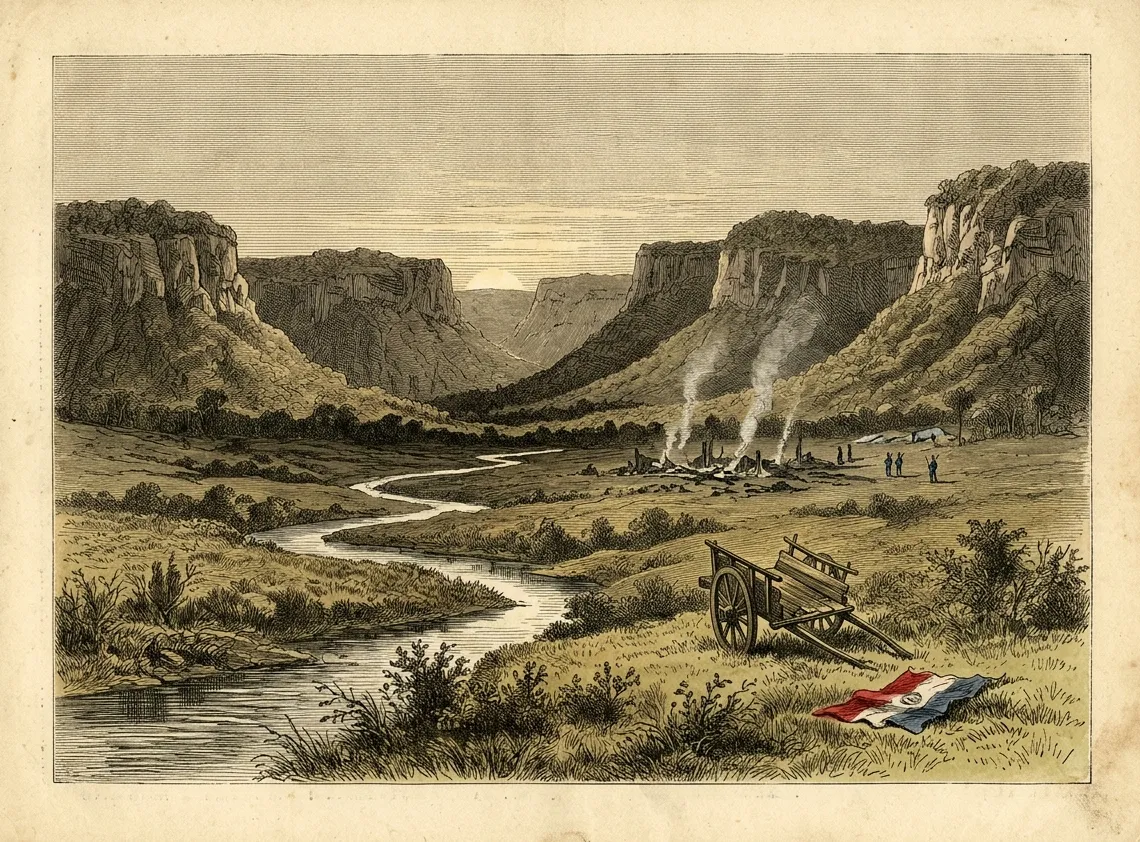
Cerro Corá is a valley ringed by hills, in what is now the department of Amambay, near the border with Brazil. In February 1870, Marshal Francisco Solano López camped there with what was left of his army. The Aquidabán River and its tributary, the Aquidabán-nigüí stream, closed off the camp to the north, west and south.
There were only a few ways in. From the northwest, through the fords of the Tacuara stream and the Aquidabán River, each with its own guard: about 90 men and two cannons at the Tacuara, about 100 at the Aquidabán. From the southeast, along the Chirigüelo picada.
The long retreat
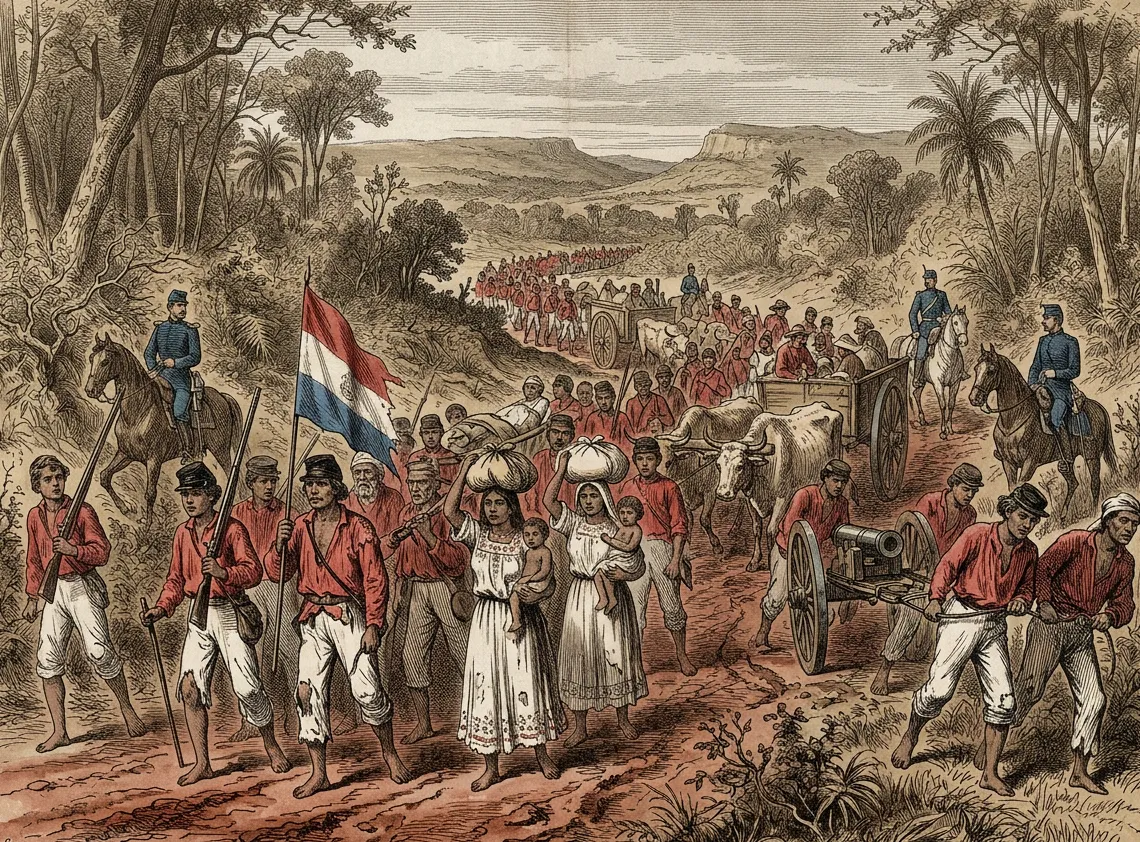
Cerro Corá was the end of a march of almost seven months.
In August 1869, after Piribebuy and Acosta Ñu, López left Azcurra, in the Cordillera. He passed through Caraguatay and San Estanislao, declared Curuguaty the capital and went on north through Ygatimí, Panadero and Zanja Hũ. In January 1870 he crossed the Amambay range and camped by the Corrientes River. In February he reached Cerro Corá.
Women, children, old people and wounded marched with the army. According to the historian Hugo Mendoza, at the end of August there were about 6,500 soldiers and 4,000 civilians; by the end of January about 1,200 men and 600 women and children were left. Along the way there were also trials and executions over alleged conspiracies against the marshal.
Hunger
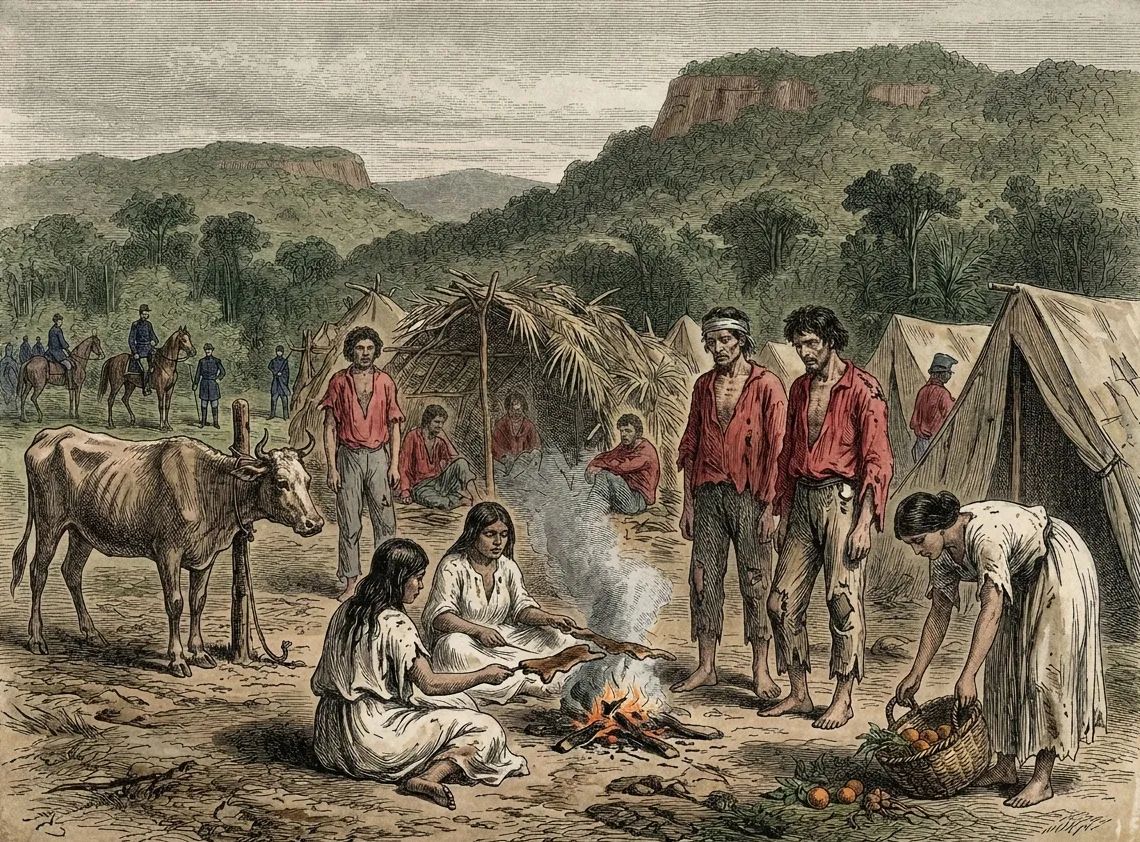
The march was made in hunger, thirst and exhaustion.
The column ate wild oranges, herbs and roots. According to Mendoza, on a single day's march of about 40 kilometers, at the end of December 1869, some 2,500 people died of hunger, thirst and fatigue. Many women drowned crossing the Jejuí River.
At Cerro Corá things did not improve. According to the Brazilian historian Mário Maestri, one thin cow a day had to feed some five hundred people. Hides were singed and eaten, and ground bones were cooked with fruit from the woods.
Câmara's columns
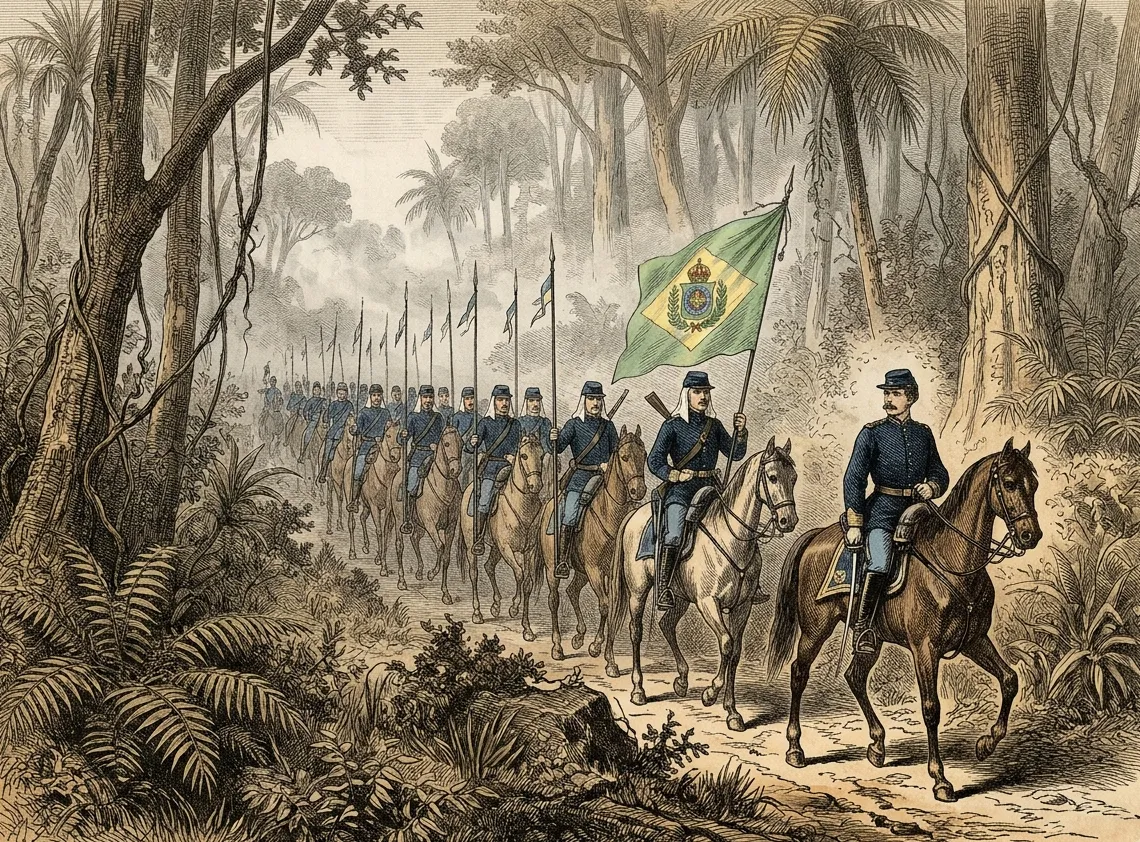
On the other side, the Brazilian general José Antônio Correia da Câmara was hunting López from the west.
Câmara had reached Concepción in September 1869. He split his forces into columns to close the northern routes. On 18 February 1870, deserters and prisoners told him where the camp was. On the 26th he set out, and on the 28th he camped by the Guazú stream, a few hours from Cerro Corá.
He had between 2,000 and 2,600 men, with infantry, cavalry and at least two cannons. Part of the cavalry carried Spencer repeating carbines.
Dawn on 1 March
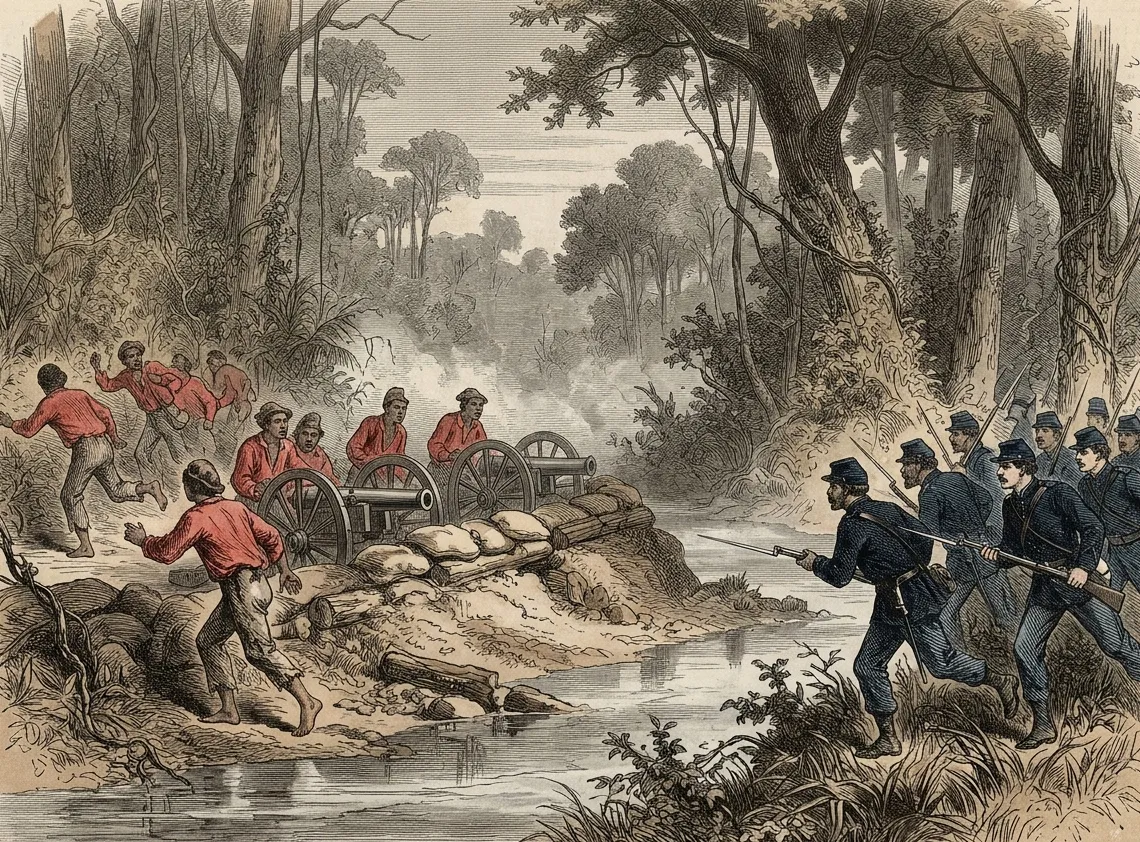
On 28 February, López gathered his commanders. They decided to stay and fight.
According to a count made that day, 412 officers and soldiers were left. Bernardino Caballero, the hero of Tatayibá, was not there: on 12 February he had left with about 40 men to look for cattle.
At dawn on 1 March, Lieutenant Colonel Francisco Antônio Martins, guided by deserters, fell on the Tacuara ford from the rear. He attacked with the bayonet and took the two cannons before they could fire. Around six in the morning, those who escaped raised the alarm in the camp. Soon after, shots rang out at the Aquidabán ford, which also fell.
Fifteen minutes
López went out to meet the enemy with the troops he had left.
He advanced about 700 meters toward the mouth of the Aquidabán picada. Meanwhile, the imperial cavalry was surrounding the camp from the east, in a pincer movement. General Francisco Roa died refusing to surrender.
Around midday, Colonel João Nunes da Silva Tavares, “Joca”, entered the center of the camp with cavalry and infantry. According to Câmara's report, the fighting lasted no more than fifteen minutes. Centurión was wounded in the face and survived: years later he wrote his memoirs of the war.
Toward the Aquidabán-nigüí
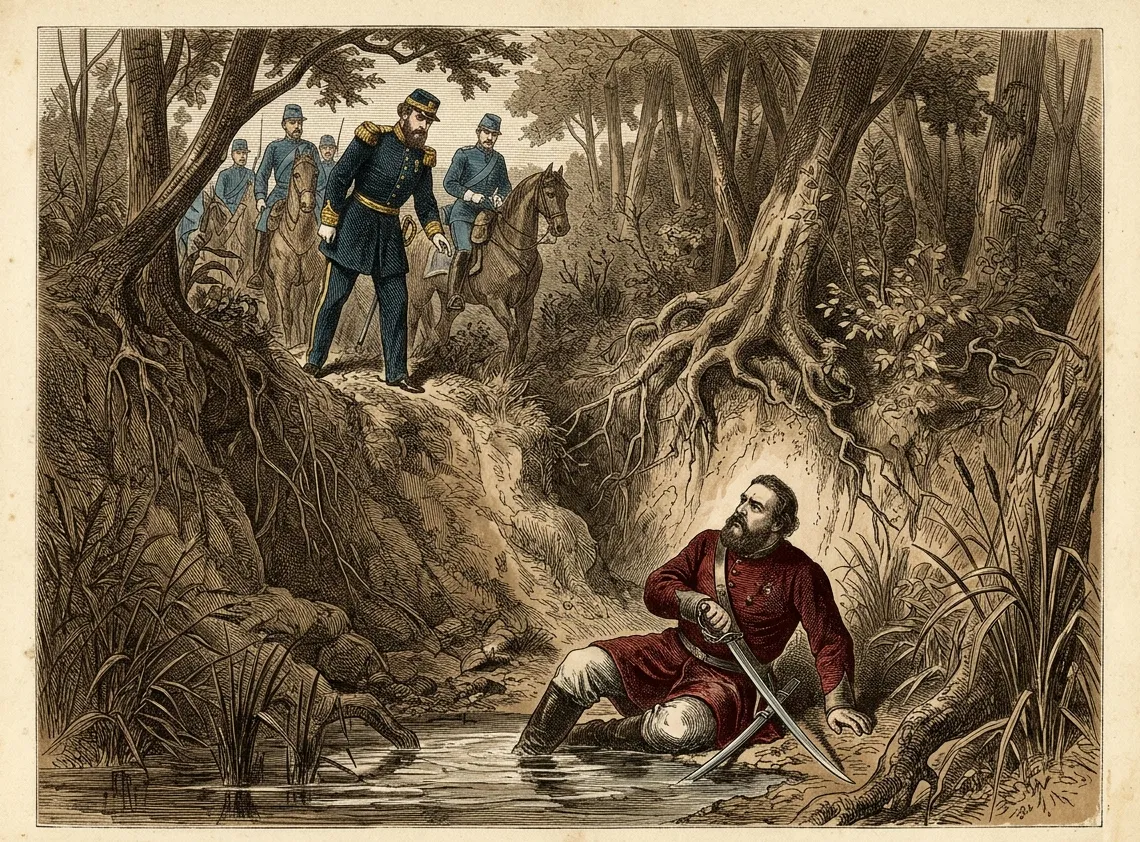
With his line broken, López fled on horseback toward the stream.
Riders under Tavares went after him. Corporal José Francisco Lacerda, aged about 22, known as “Chico Diabo”, drove his lance into López's lower abdomen. Another blow opened a wound on his forehead.
Badly wounded, López reached the Aquidabán-nigüí with two companions, Colonel Silvestre Aveiro and Ignacio Ibarra. He could not climb the bank on the far side. He stayed at the water's edge, with part of his body in the water.
“I die for my country” (“Muero por mi patria”)
Câmara reached the bank with a few soldiers and demanded that López surrender and hand over his sword.
López refused. His last words are not known for certain. “I die for my country and with sword in hand” (“Muero por mi patria y con la espada en la mano”), according to Colonel Silva Tavares. “I will not surrender, nor give up my sword; I die with it and for my country” (“No me rindo, ni entrego mi espada; muero con ella y por mi patria”), according to one of Câmara's reports. “I die with my country!”, according to Aveiro and part of the Paraguayan tradition.
A shot rang out at once. The surgeons' report describes a rifle bullet that entered through the back and did not exit. So died Marshal Francisco Solano López, at the age of 43.
Panchito
Among the last defenders of Cerro Corá was a 15-year-old colonel.
Juan Francisco López, “Panchito”, was the eldest son of the marshal and Elisa Alicia Lynch. He was born in January 1855. According to a biography based on his baptism record and on studies of the officers of the war, Colonel Francisco Wisner de Morgenstern taught him mathematics, history and science; the priests Fidel Maíz and Manuel Antonio Palacios, Latin; his mother, English and French; and Francisco Isidoro Resquín, his military training.
He went with his father throughout the war and was promoted several times: major at 14 and then colonel. At Cerro Corá he served alongside the marshal; the count of 412 officers and soldiers made on 28 February is attributed to him.
“A Paraguayan colonel does not surrender” (“Un coronel paraguayo no se rinde”)
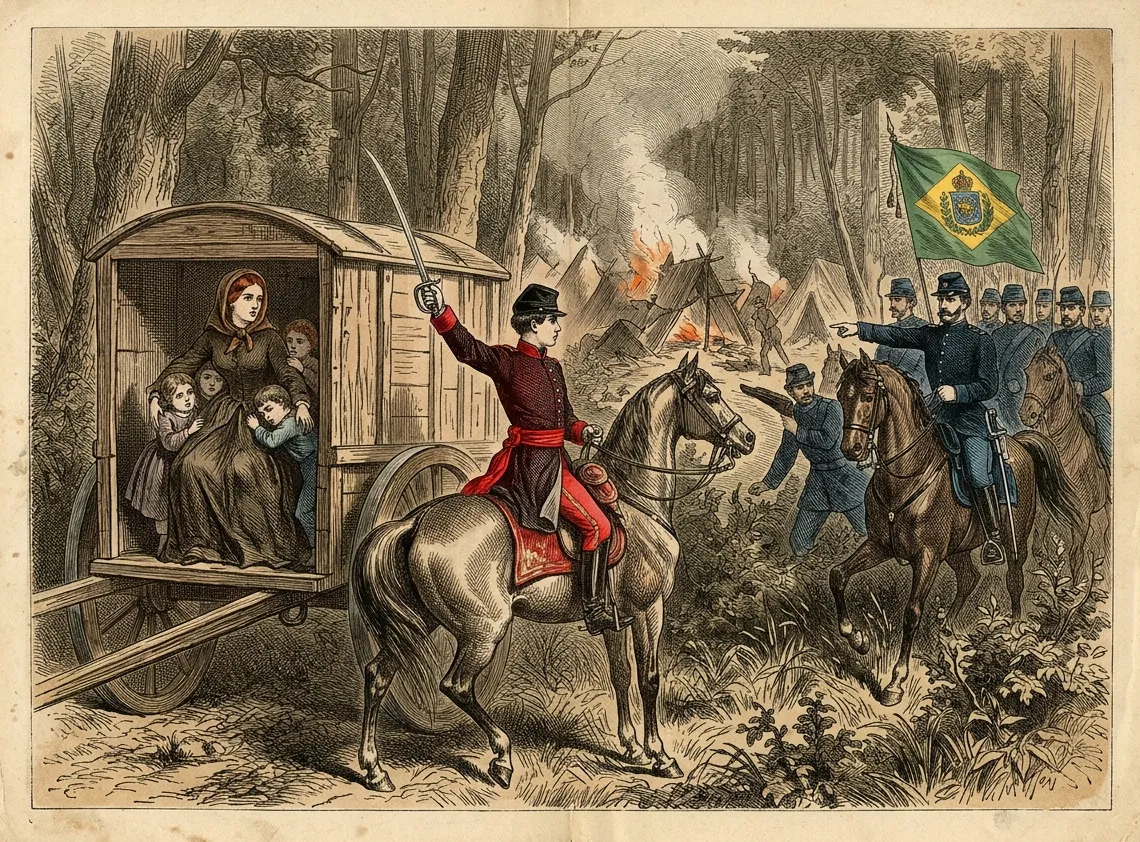
When the camp fell, the marshal charged his son with protecting his mother and his siblings.
Panchito rode back to escort Elisa Lynch's cart, about 300 meters from headquarters. There he was surrounded by Brazilian soldiers. Lieutenant Colonel Francisco Antônio Martins ordered him to surrender. Panchito refused, saber in hand, and was killed.
Elisa Lynch got down from the cart and held her son's body. In the Exposición y protesta she published years later, she told how she ran to him under fire. A question to the victors is also attributed to her: “Is this the civilization you promised?” (“¿Esta es la civilización que han prometido?”).
The grave
How and where López was buried is also debated.
The most widespread version says that Elisa Lynch buried López and Panchito with her own hands. According to Maestri, she obtained permission for the burial, in a grave dug by Brazilian sappers. Other versions credit the task to Colonel Francisco Lino Cabriza or to Victoriano López, a servant of Lynch's.
In 1936, a commission dug beside the Aquidabán-nigüí and took some remains to the Panteón de los Héroes in Asunción. Today most of the historians consulted doubt that they are the marshal's.
The toll
It was an unequal fight: some four hundred combatants against more than two thousand.
- Over 100 Paraguayan dead
- 240 prisoners, civilians among them
- 7 Brazilian wounded
- 15 minutes of fighting in the camp
Besides the marshal and Panchito, the dead included Vice President Domingo Francisco Sánchez, aged 74, run through by Captain Azambuja's lance; minister Luis Caminos, General Roa, Colonel José María Aguiar and the surgeon Estigarribia, among others. After the fighting the camp was set on fire, and many sick and wounded died in it.
Among the prisoners were General Francisco Isidoro Resquín and General Delgado, López's mother and sisters, Elisa Lynch and her younger children.
After Cerro Corá
With López's death the war ended.
On 2 March the prisoners were taken to Concepción. Elisa Lynch was exiled and died in Paris in 1886. Bernardino Caballero surrendered on 8 April, with about 50 men.
On 20 June 1870, Paraguay and the allies signed a preliminary peace agreement. The final treaties were signed separately: with Brazil in 1872 and with Argentina in 1876.
Since the 1930s, 1 March has been Heroes' Day in Paraguay. Since 1976, the site has been part of Cerro Corá National Park.
One valley, two memories
Cerro Corá was less a battle than the end of a retreat.
In Paraguayan memory, it is the place where a people chose not to surrender, which is why 1 March is Heroes' Day. For many historians it is, above all, the last chapter of a tragedy that cost Paraguay a huge share of its population. The two readings live side by side. Both are born in the same valley, between two streams.
Sources
- Mário Maestri, “¿Quem matou o marechal? Cerro Corá, 1º de março de 1870: entre a história e o mito”, Tempos Históricos 18 (2014). Geography of the camp, forces, times, wounds, medical report, Câmara's reports, burial.
- Hugo Mendoza, La campaña de las Cordilleras, Portal Guaraní. Route of the retreat, figures for the column, hunger, Câmara's columns.
- ABC Color: “Así fue aquella jornada en la que murió el Mariscal” (2020), with Silvestre Aveiro's account; “El asesinato del Mcal. López envuelto en la polémica”; “De Curuguaty a la Villa Ygatimí” (Jorge Rubiani).
- Última Hora: “Huida o estrategia: el itinerario de Solano López hacia el noreste”.
- Juan Francisco López, Spanish Wikipedia: Panchito's birth, teachers and promotions, with his baptism record, Nancy Pérez (Los oficiales en la Guerra de la Triple Alianza) and Elisa Lynch's account (Exposición y protesta).
- La Nación (Paraguay): “Panchito” (Bea Bosio, 2020, on Efraím Cardozo); the marshal's remains and the Panteón de los Héroes (2021); Heroes' Day (2020).
- Rudolph Schubert, on Spencer carbines in the Brazilian Army, Revista Brasileira de História Militar 36 (2024).
- Battle of Cerro Corá, English and Portuguese Wikipedia; articles on Chico Diabo, Domingo Francisco Sánchez and Elisa Lynch. Cross-checking.
Disputed points
- Date of arrival at Cerro Corá: 8 or 14 February.
- Brazilian force: from 2,000 to 2,600; other works, 4,000 to 4,500.
- Times of the attack: alarm around six, clash around midday; another version has the Brazilians expected around eleven.
- Blow to López's head: axe or saber, with no identified attacker.
- Last words: “I die for my country”, “I die with my country” and other variants.
- Final shot: who fired (João Soares, according to witnesses), circumstances and weapon (Spencer carbine, rifle or revolver).
- Panchito: birthplace, age (15 or 17), origin of his phrase (Lynch's account or his brother Enrique's testimony) and who fired the shot.
- Burial: Elisa Lynch, Brazilian sappers, Colonel Cabriza or a servant. Authenticity of the remains in the Panteón.
Cerro Corá closes the collection. Here ended the war that had begun in 1864.
The history of Paraguay went on afterward, with the survivors.
Open in the illustrated encyclopedia ›
Guerra Guasu Collection · by José Báez · Free for everyone · Home · Privacy