CURUPAYTY
The trench that did not fall · 22 September 1866 · Humaitá campaign
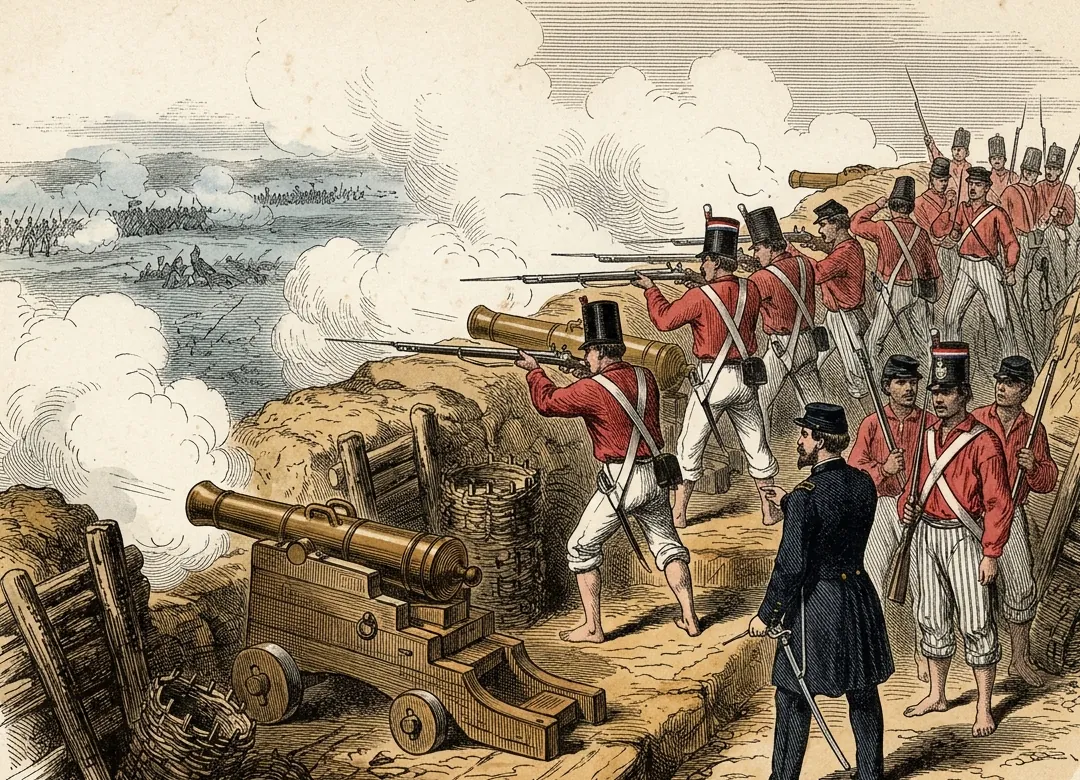
Battle card
| Date | 22 September 1866 | |
|---|---|---|
| Location | Curupayty, on the Paraguay River | |
| War | Triple Alliance · Humaitá campaign | |
| Duration | From midday to 4 or 5 p.m. | |
| Result | Paraguayan victory. The allied assault is repelled. | |
| Paraguay | Empire of Brazil and Argentina | |
| Commanders | José Eduvigis Díaz | Bartolomé Mitre (commander in chief) Porto Alegre (Brazilians) Wenceslao Paunero and Emilio Mitre (Argentine columns) Admiral Tamandaré (fleet) |
| Forces | About 5,000 men | 17,000 to 20,000 men ‡ About 11,000 Brazilians and 9,000 Argentines, according to one source |
| Artillery and fleet | 49 cannons ‡ | 8 ironclads and 3 gunboats |
| Defenses | Trench of about 2 km, ditch and abatis | Ladders and fascines for the assault |
| Casualties | 92 ‡ | About 4,000 according to the military reports ‡ 9,000 to 10,000 according to Paraguayan sources |
‡ Figure disputed among sources. Uruguayan participation in the assault is not documented with figures either.
A note to the reader
Each page carries a mark that shows what kind of information you are reading.
The plates in this work are contemporary illustrations, made in the manner of period engravings. They are not original documents.
Mud, fire and legend
On 22 September 1866, the south of Paraguay became mud, fire and legend.
Three weeks earlier, on 3 September, the allies had taken the fort of Curuzú. The next obstacle on the road to Humaitá was Curupayty, a forward position on the Paraguay River. In command of the attack was Bartolomé Mitre, president of Argentina and allied commander in chief.
Yataity Corá
On 12 September, Marshal Francisco Solano López and Mitre met at Yataity Corá.
López proposed peace. The meeting was cordial: they drank a toast and exchanged riding whips as gifts. But the allies rejected the proposal, and the war went on.
The attack on Curupayty was planned for the 17th. The rains postponed it until the 22nd. Those days were decisive.
Two kilometers of trench
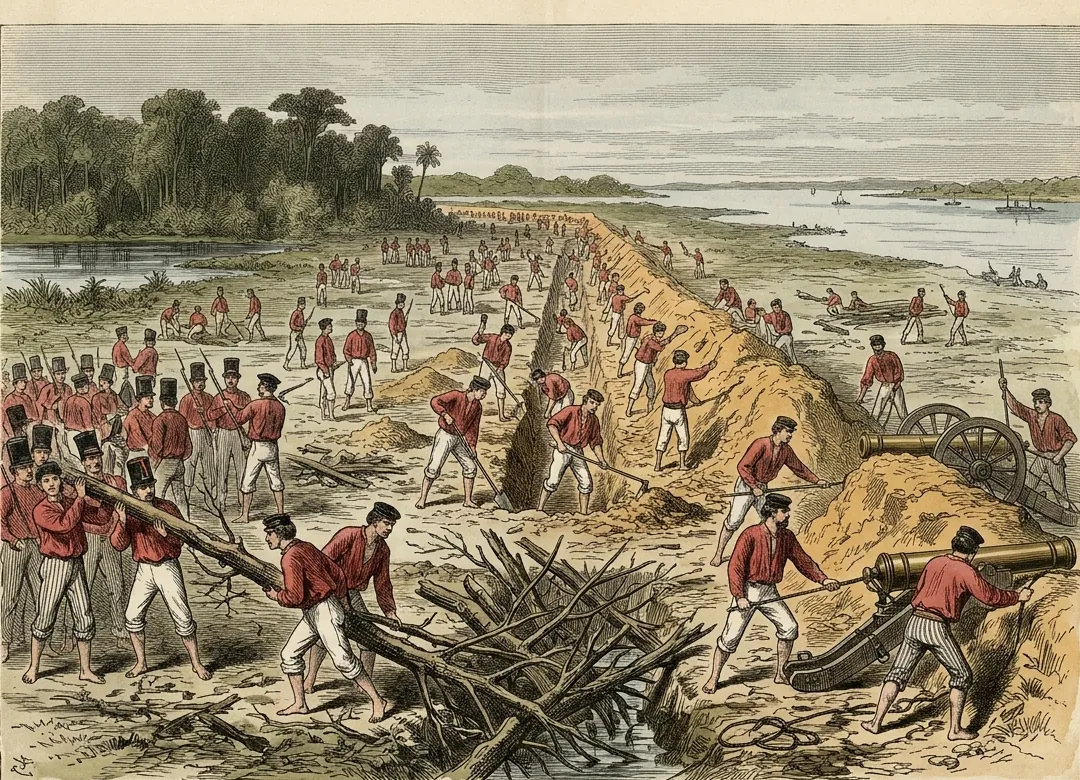
During those days, the Paraguayans dug without rest.
They opened a trench about two kilometers long, from the Paraguay River to Laguna Méndez. In front of it they dug a ditch about three and a half meters wide and almost two deep. Farther out, with felled trees and sharpened branches, they raised a wall of thorns: the abatis.
According to one chronicle, Bernardino Caballero, the future hero of Tatayibá, directed part of the tree felling and the digging.
José Eduvigis Díaz
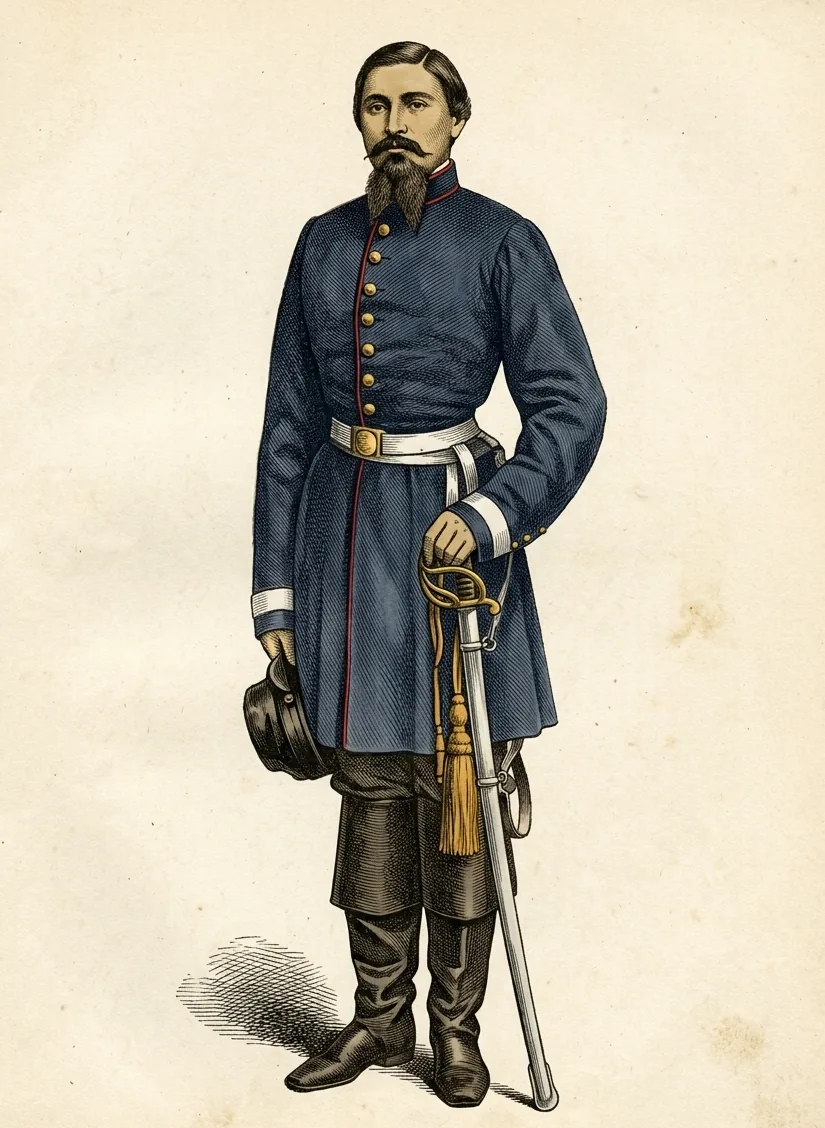
At the head of the defense was José Eduvigis Díaz.
He was born on 17 October 1833 in Pirayú. He was 33 years old and had about five thousand men to hold the trench.
The bombardment
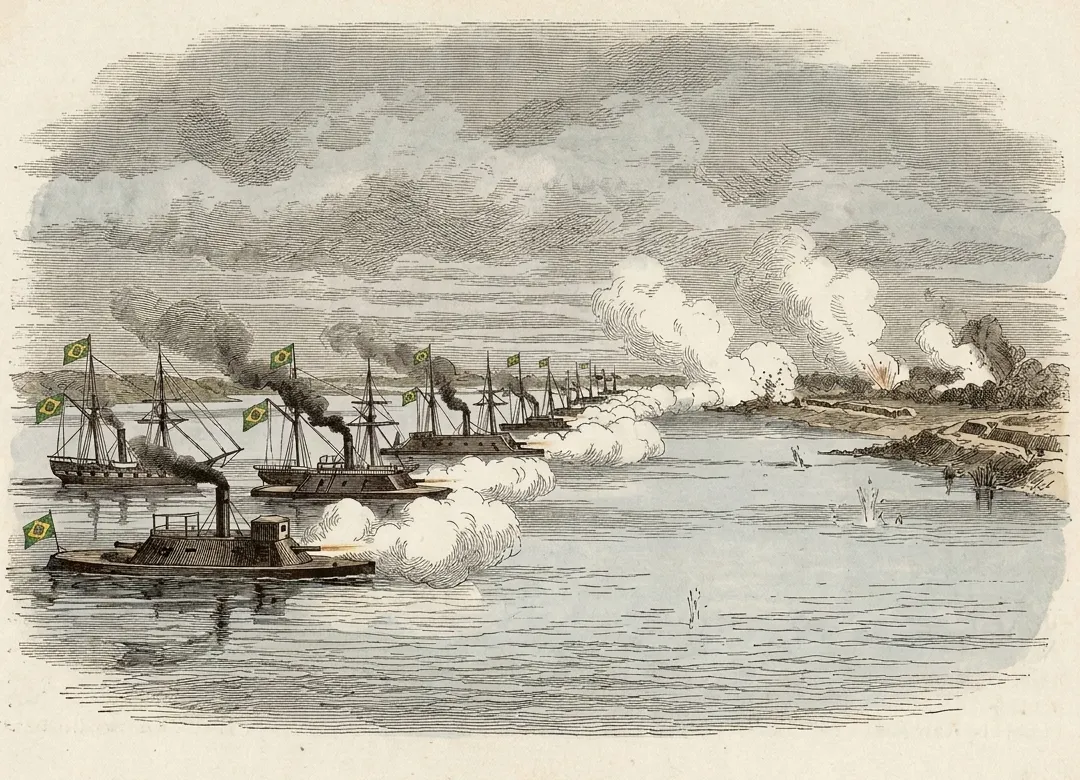
It had been raining since the 17th. The rain stopped at six in the morning on the 22nd, and the field was left flooded.
From early on, Admiral Tamandaré's Brazilian fleet bombarded the position. For four or five hours it fired thousands of projectiles. When the smoke cleared, the Paraguayan line was still standing: according to one source, the bombardment damaged a single cannon.
The assault
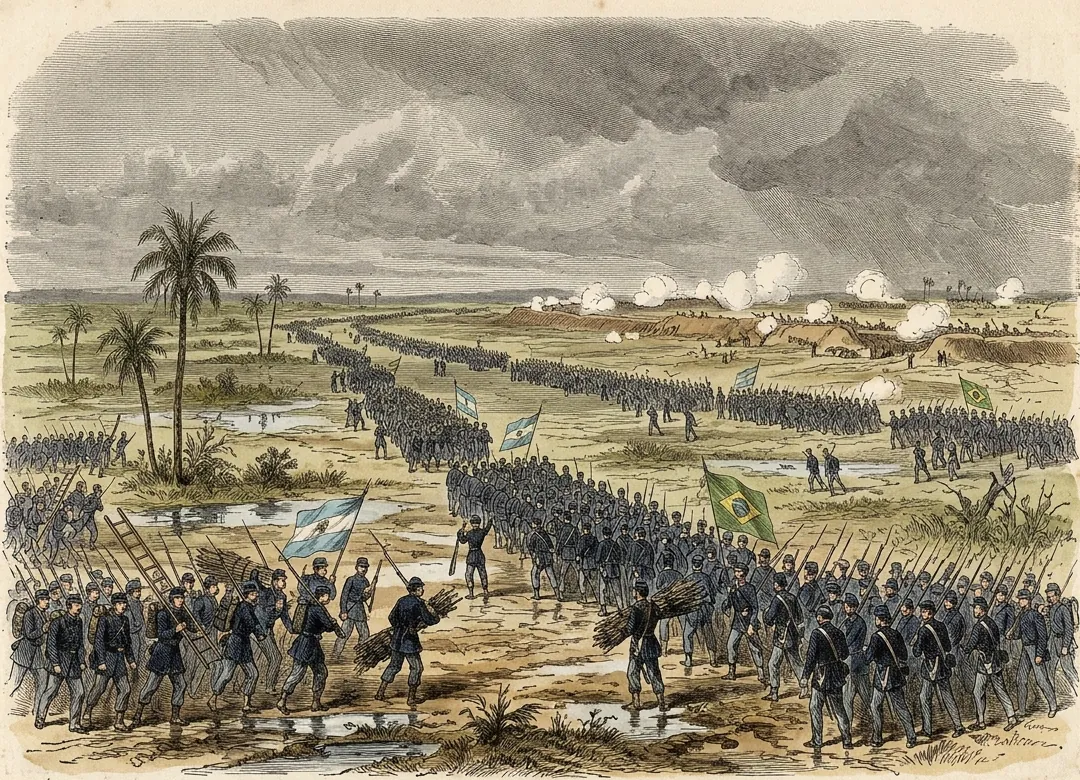
Around midday, Tamandaré gave the signal for the assault.
Between seventeen and twenty thousand men advanced, Brazilians under General Porto Alegre and Argentines. They carried ladders and fascines to cross the ditch. The mud broke up the columns and slowed the march.
In silence, the Paraguayans waited behind the parapet, muskets ready.
The trench answers
Then the trench opened fire.
The Paraguayan artillery and infantry fired on the columns in the open field. The field became a hell of mud, smoke and screams.
The ditch
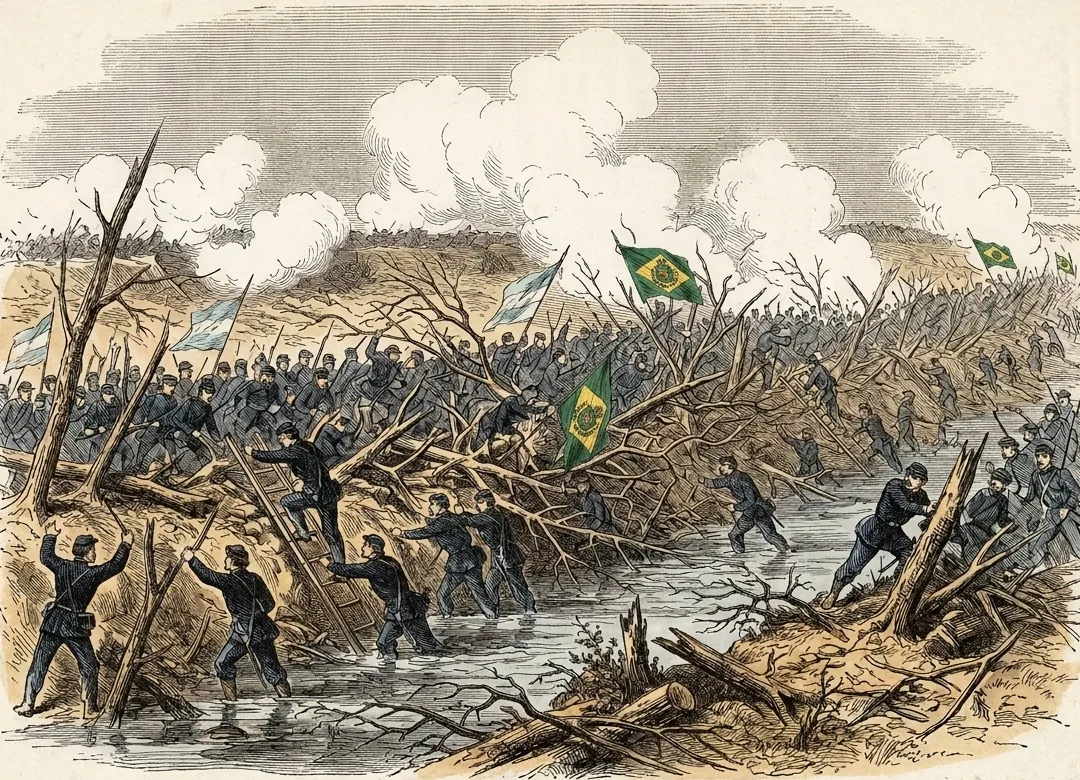
Some reached the ditch. There they were trapped, among the water, the mud and the branches of the abatis.
The ladders were too short, and the columns coming up behind piled up under fire. Allied courage broke against Paraguayan preparation.
Díaz on the line
During the fighting, Díaz rode along the line on horseback, exhorting his men.
The infantry kept firing without giving an inch. The artillery answered without pause.
When the attack broke, Díaz asked for permission to pursue the enemy. López did not authorize the pursuit.
The bugle call of Cándido Silva
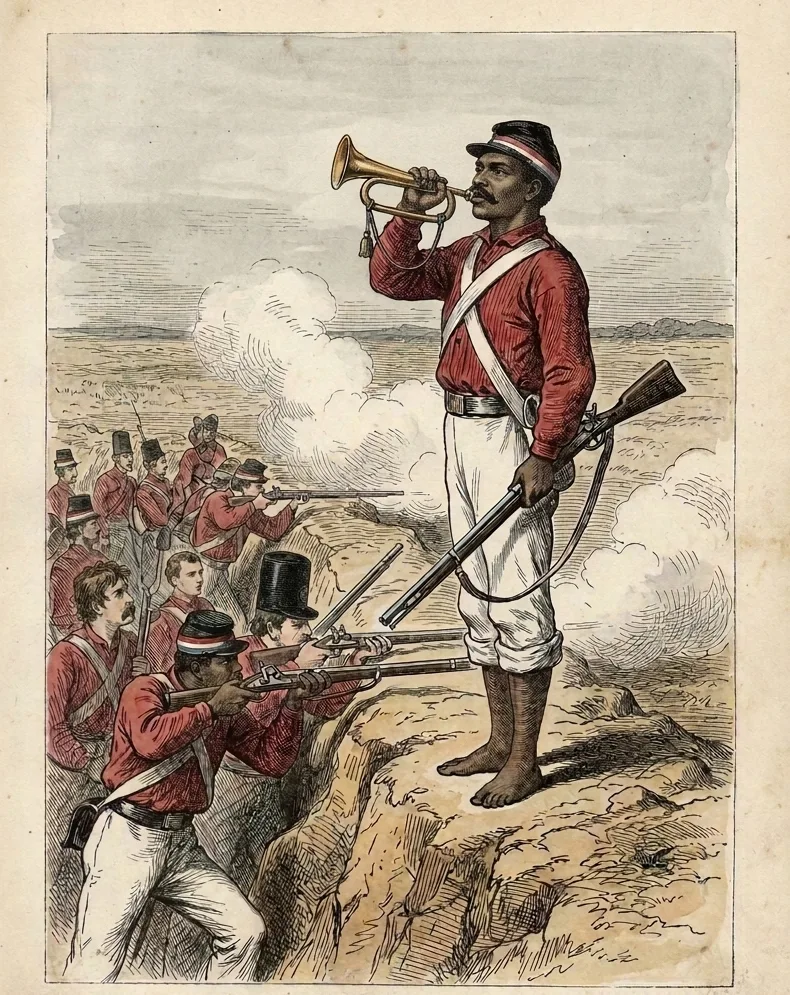
Around four in the afternoon, Mitre ordered the retreat.
Then a bugle sounded. It was the bugler sergeant Cándido Silva, an Afro-Paraguayan from Laurelty, of the 6th Battalion. He sounded the victory with the call known as “camiseta pytã'i”.
Silva was taken prisoner the following year, at Tayí. He survived the war and died on 24 December 1925.
The toll
A line of five thousand men stopped almost twenty thousand.
- 92 Paraguayan casualties
- 4,227 allied casualties according to the military reports
- 2,225 Argentine
- 2,002 Brazilian
Among the allied dead was Dominguito Sarmiento, son of Domingo Faustino Sarmiento, a future president of Argentina. Francisco Paz, son of Vice President Marcos Paz, also fell that day. And the Argentine soldier and painter Cándido López lost his right hand: years later he painted the battle with his left.
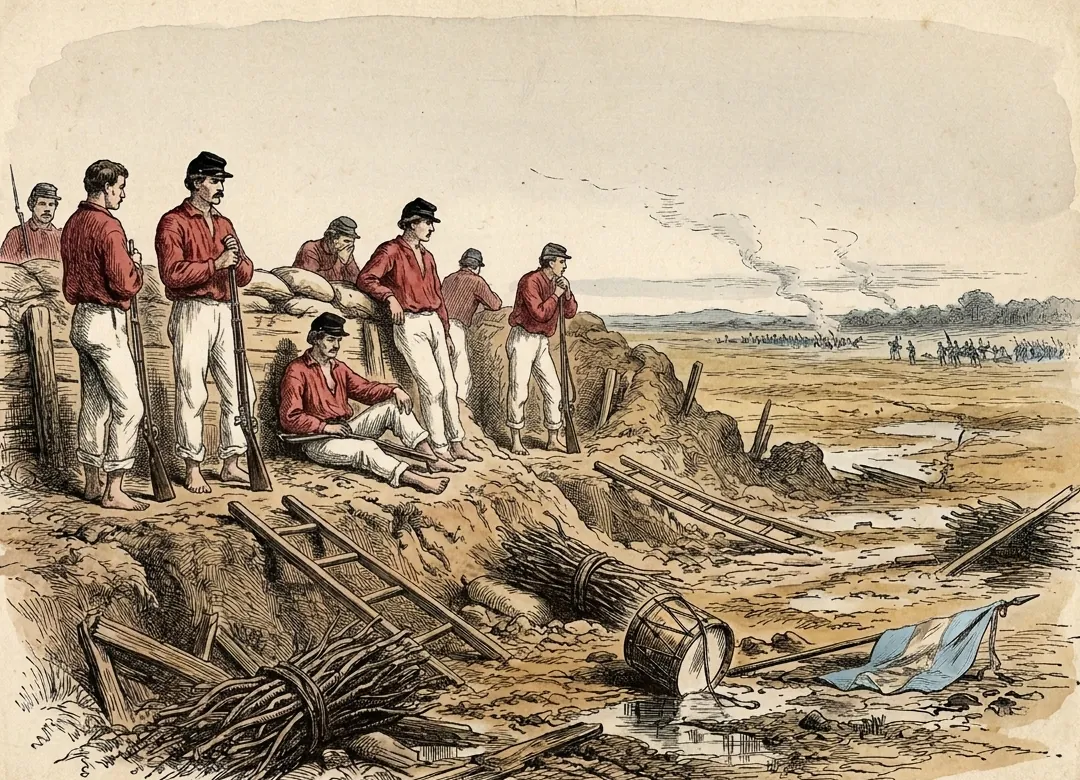
After Curupayty
The front stood still for about ten months: the allied offensive only resumed on 22 July 1867.
On 10 October 1866, the Empire of Brazil put the Marquis of Caxias at the head of its forces. Tamandaré and Flores were relieved. Provincial uprisings broke out in Argentina, and Mitre returned to his country in February 1867. He came back to the front in July and gave up command in January 1868.
Díaz did not live to see the offensive resume. On 26 January 1867, as he was traveling the river by canoe, a Brazilian shell shattered his leg. He died on 7 February at Paso Pucú.
Patience, ingenuity, nation
Curupayty was no accident.
It was days of shoveling in the rain, a ditch, a wall of branches and a line that did not move. It was patience, it was ingenuity, it was a nation.
Sources
- Batalla de Curupaytí, Spanish Wikipedia (via Hispanopedia) and English Wikipedia. Forces, order of battle, official casualties, bombardment.
- ABC Color: the Yataity Corá meeting; Curupayty anniversaries (2023); biography and death of Díaz; “La gloria de Curupayty”.
- Última Hora: the strategy of Curupayty; the Cristiano cannon.
- Hoy (2026): the day after, the allied crisis and the myths of the battle, with the historian Fabián Chamorro.
- Municipalidad de Asunción: Sergeant Cándido Silva, the “camiseta pytã'i” bugler of Curupayty.
- Corredor de las Ideas: a study of Curupayty with the measurements of the ditch according to Thompson.
- Museo Nacional de Bellas Artes (Buenos Aires): catalog of Cándido López.
Disputed points
- Allied casualties: about 4,000 according to official reports; 9,000 to 10,000 according to Paraguayan sources. Paraguayan casualties: 92 or 54.
- Allied forces: between 17,000 and 20,000, with different breakdowns by source.
- Paraguayan cannons: 49, 50, 56 or 90.
- Design of the trench: Thompson, other European engineers or Díaz.
- Díaz's rank: brigadier general or colonel.
- Distance to Humaitá: from 8 to 20 kilometers.
- Uruguayan participation in the assault.
- The cry “¡Neike mitã!”: no source.
A year after Curupayty, in front of Humaitá, Bernardino Caballero's cavalry fell into a trap at Tatayibá.
Open in the illustrated encyclopedia ›
Guerra Guasu Collection · by José Báez · Free for everyone · Home · Privacy