Humaitá
The passage and the fall · 19 February to 5 August 1868 · Humaitá campaign
Battle card
| Date | 19 February to 5 August 1868 | |
|---|---|---|
| Location | Humaitá, on the Paraguay River, and the Chaco opposite | |
| War | Triple Alliance · Humaitá campaign | |
| Duration | The passage: from midnight to dawn on 19 February. The siege: until 25 July ‡ | |
| Result | Allied victory. The squadron forces the passage; the garrison abandons the fortress and surrenders in the Chaco. | |
| Paraguay | Empire of Brazil and allies | |
| Commanders | Marshal Francisco Solano López (until March) Colonel Paulino Alén (fortress) Colonel Francisco Martínez (from July) | Marquis of Caxias (commander in chief) Admiral Joaquim José Inácio (squadron) Delfim Carlos de Carvalho (passage division) General Ignacio Rivas (Chaco) |
| Forces | About 20,000 at the start of the siege; 2,000 to 3,000 in July 1868 ‡ | 40,000 to 45,000 men ‡ |
| Artillery and ships | Eight batteries on the river ‡, chains, the Timbó battery in the Chaco and canoes | Ironclads Barroso, Bahia and Tamandaré; monitors Rio Grande, Alagoas and Pará: 462 crew |
| Casualties | In the passage, no known figure 110 to 400 in the boarding of 2 March ‡ 1,200 to 1,300 surrendered on 5 August ‡ | In the passage, 10 wounded in the squadron 576 to 1,200 in the attack of 19 February ‡ From over 1,000 to about 2,000 in the assault of 16 July ‡ |
‡ Figure disputed among sources. This booklet covers a six-month campaign: the figures refer to different events, indicated in each row.
A note to the reader
Each page carries a mark that shows what kind of information you are reading.
The plates in this work are contemporary illustrations, made in the manner of period engravings. They are not original documents.
The key to the river
Humaitá seemed impossible to defeat. More than a fort, it was the shield of Paraguay: as long as it held, no enemy ship could go up toward Asunción.
Carlos Antonio López ordered its construction in 1854, in the middle of a dispute with Brazil over borders and navigation. The design was by the Hungarian engineer Francisco Wisner de Morgenstern; later, British engineers in Paraguayan service, such as George Thompson, worked on its defenses.
The fortress stood on a sharp bend of the river, about 24 kilometers above its junction with the Paraná. There the channel narrowed to about 200 meters, at the foot of a bluff some ten meters high. On land, a trench about 13 kilometers long closed off the field.
On the bluff, the batteries pointed at the water. The most famous, the Londres battery, had embrasures for sixteen cannons and walls more than eight meters thick. Farther up, the Chain battery guarded a barrier of chains stretched from bank to bank, held up by canoes and pontoons, to stop ships under fire. In all, the fortress came to have more than a hundred guns. Downriver stood the batteries of Curuzú and Curupayty; on the Chaco bank, upriver, the fort of Timbó.
El Cristiano
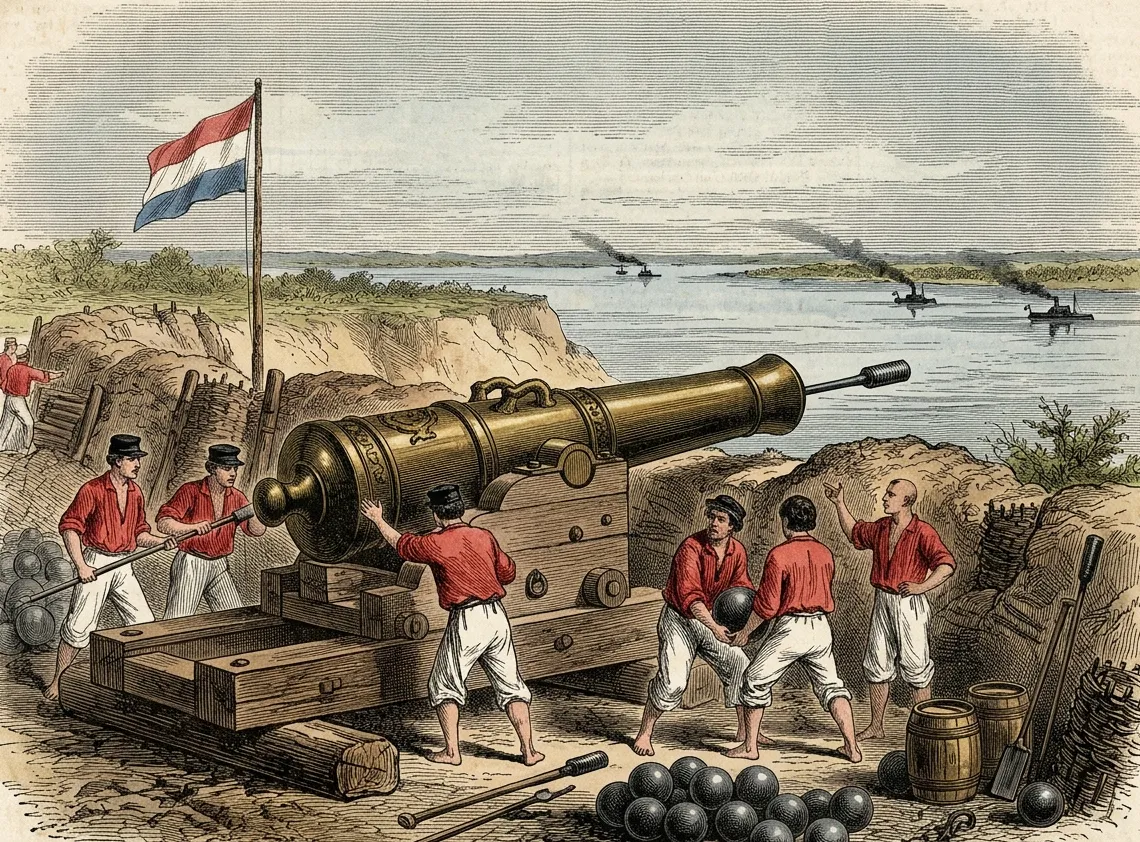
The most feared gun at Humaitá was born from the bells of Paraguay.
By late 1866, with the river blockaded by the allied squadron, Paraguay could no longer bring in weapons from abroad. To cast a huge cannon, the bronze of the bells of the country's churches was gathered. Casting began in January 1867, at Ybycuí; then, at the Asunción Arsenal, the bore was drilled and the piece mounted. One of its trunnions bears the inscription «Arsenal Asunción 1867». Its name was El Cristiano, «the Christian».
It weighed about twelve tons and fired 10-inch round shot of about 150 pounds: nearly 70 kilos of iron, one of the heaviest blows of the Paraguayan artillery. It first served in the Curupayty battery, where it fired on the ironclads on 15 August 1867. It was then moved to the batteries of Humaitá.
The siege
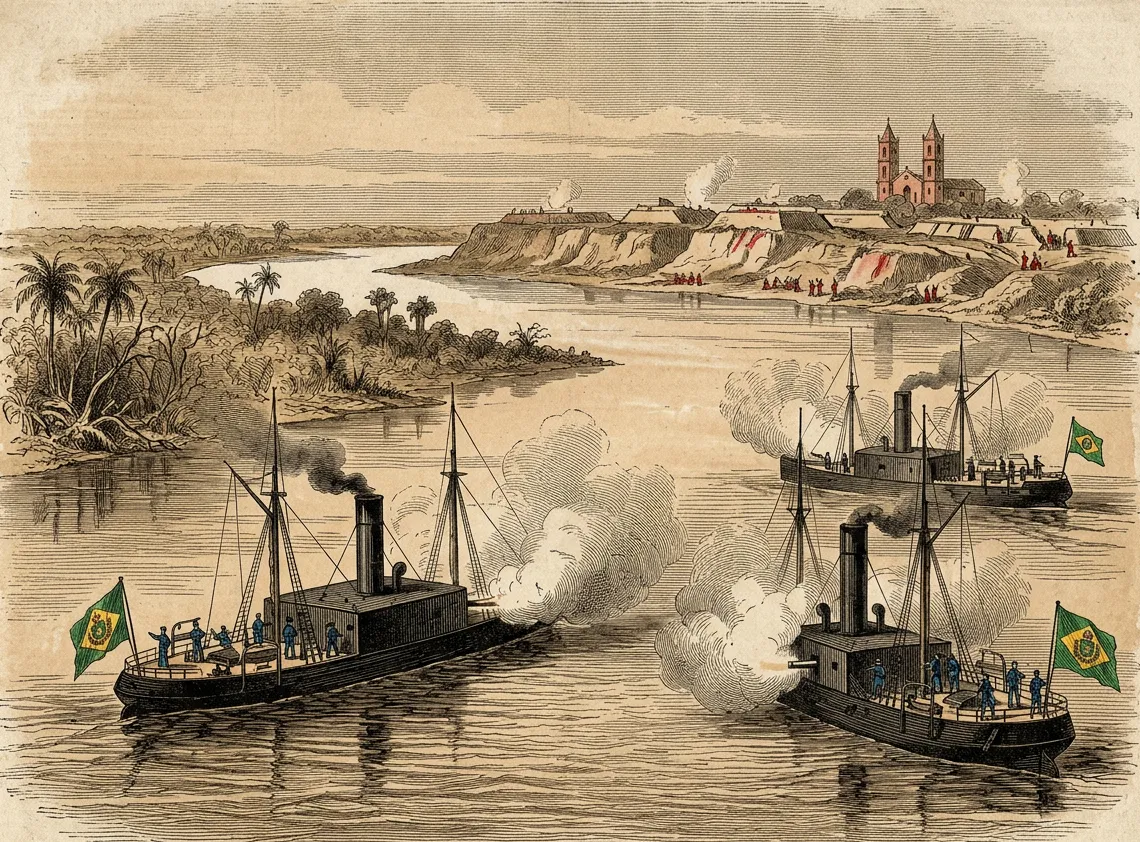
From July 1867, the allies gradually closed in on Humaitá.
On 22 July, the army of the Marquis of Caxias began to encircle the fortress from the east. On 15 August, ten Brazilian ironclads forced the passage of Curupayty, but did not try to pass Humaitá: they stayed anchored between the two fortresses for almost six months, bombarding.
On 2 November 1867, two weeks after Tatayibá, the allies took Tayí, on the river, north of Humaitá. From then on, the fortress received supplies only through the Chaco: López had a road about 87 kilometers long cut from Timbó, on the opposite bank, to Monte Lindo, near the Tebicuary River.
Lashed in pairs
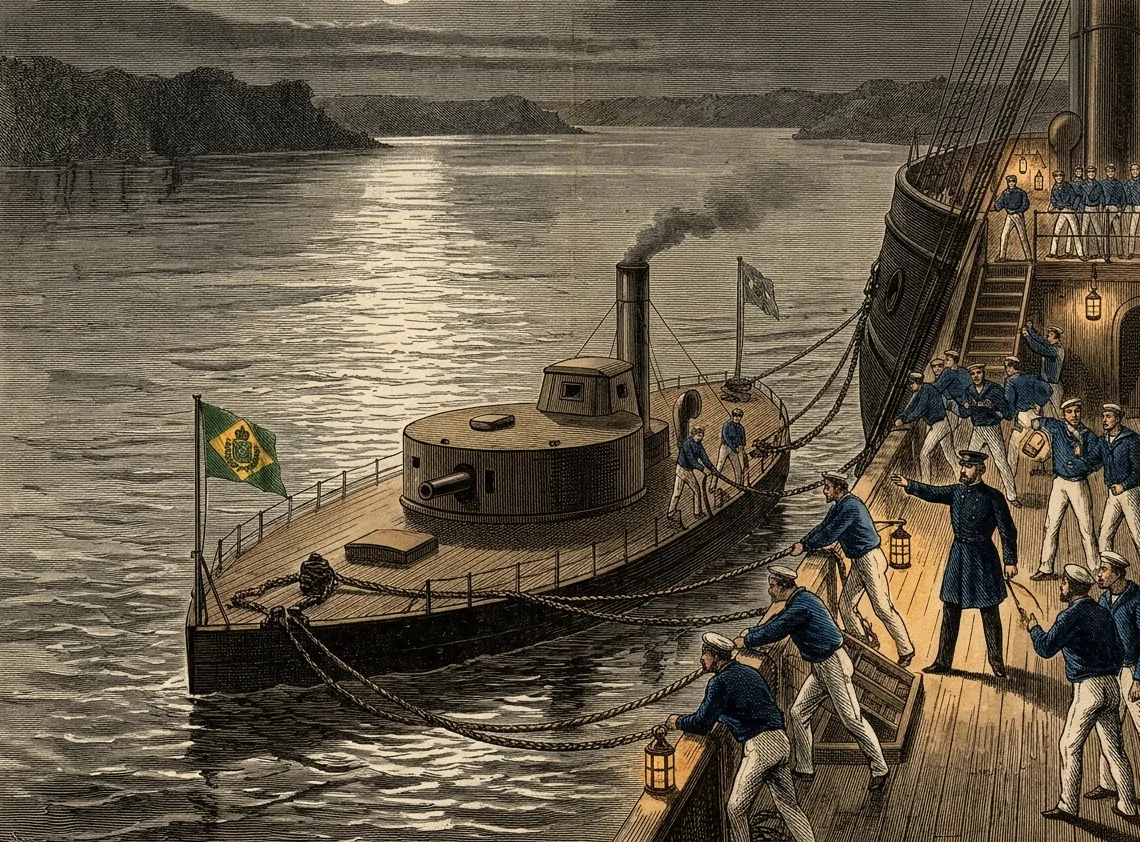
In February 1868, the river rose and the barrier was left underwater.
For months, Brazilian guns had sunk the canoes and pontoons that held up the chains. In January two more went down, and the chain lay stretched along the bottom, half buried in the mud. With the flood, around 16 February, it lay under some 3.5 to 4.5 meters of water.
Admiral Joaquim José Inácio then approved the attempt. Three ironclads would each carry a monitor lashed alongside: the Barroso with the Rio Grande, the Bahia with the Alagoas and the Tamandaré with the Pará. If a monitor lost its engine, the large ship would carry on with it in tow. In command was Commander Delfim Carlos de Carvalho, aboard the Bahia.
Under the bluff
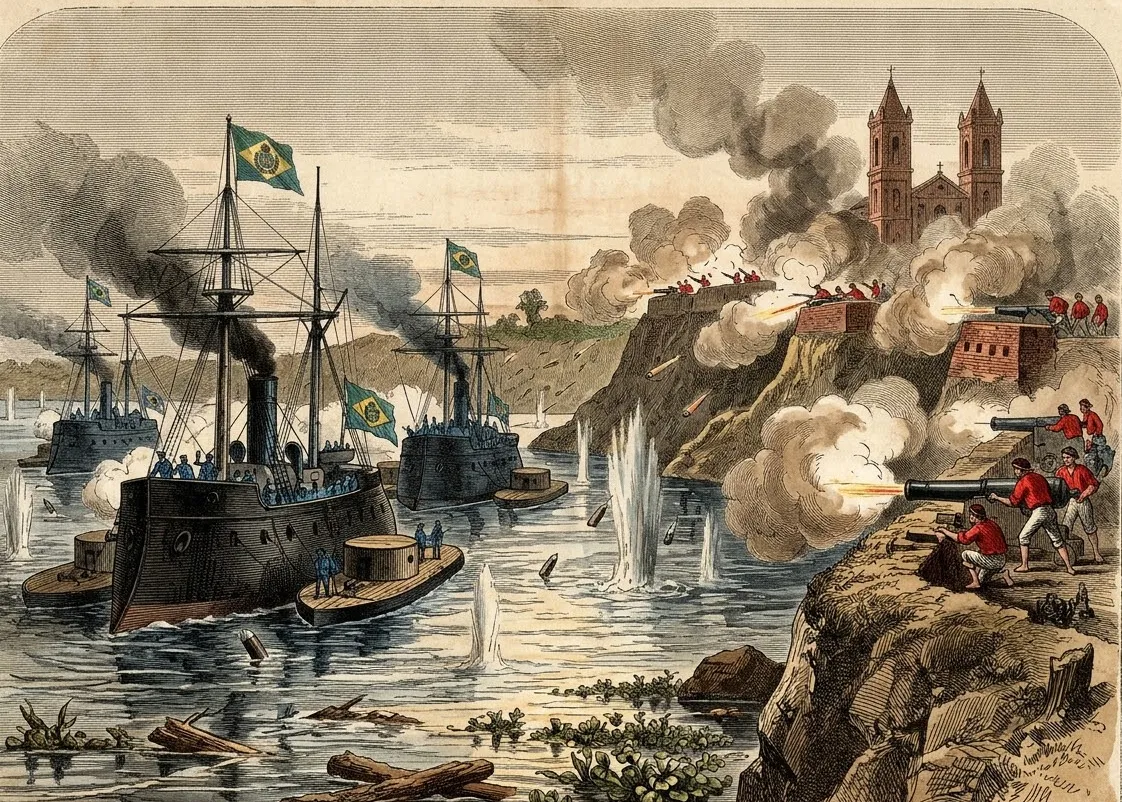
At eleven at night on 18 February, the engines let off steam. It was the signal.
Around midnight, the Barroso and the Rio Grande got under way in the lead. Behind came the Bahia with the Alagoas and the Tamandaré with the Pará. Near four o'clock, a rocket fired from the Barroso signaled that the first pair had passed the chain. At 4:50, the Bahia was already out of the fortress's range.
At the same time, on land, the Brazilians attacked the redoubt at Laguna Cierva, which they called the Establecimiento, to distract the garrison. About 500 Paraguayans under Major Antonio Olavarrieta drove back four assaults and, out of ammunition, fell back to Humaitá.
The Alagoas, alone
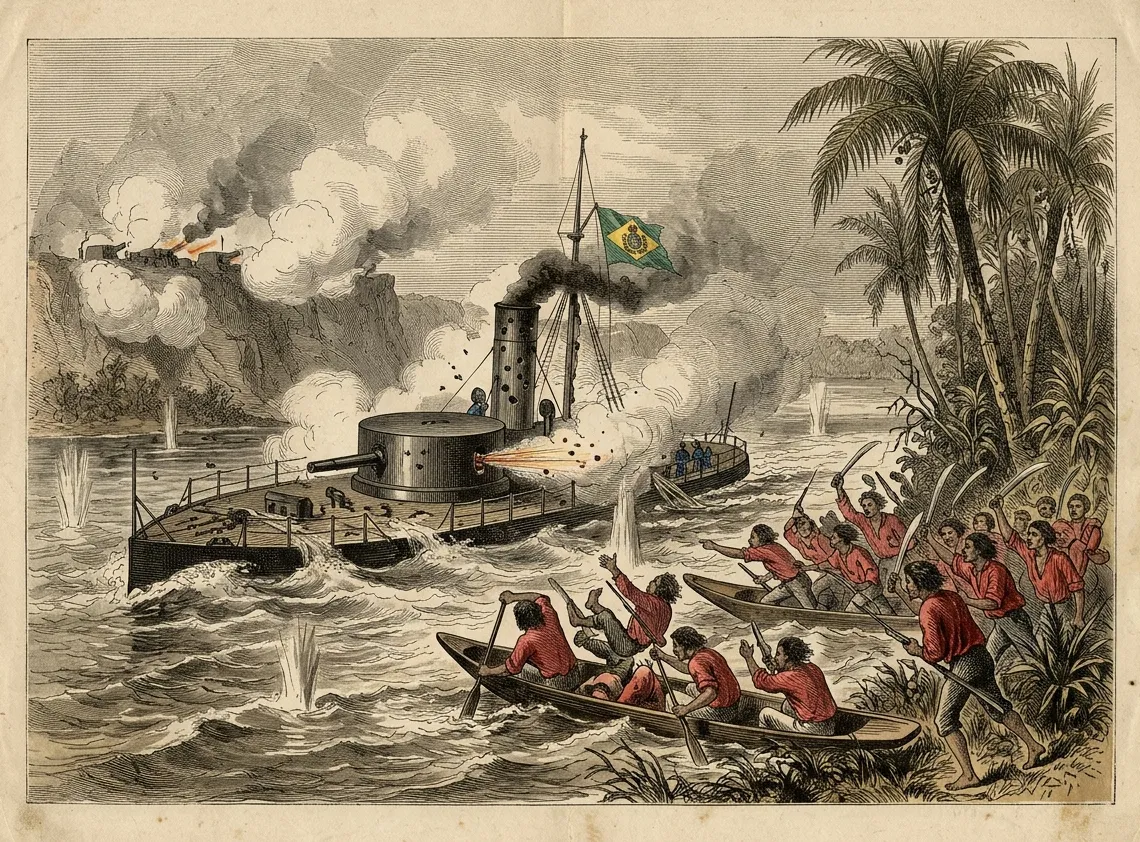
In front of the Chain battery, a shot cut the Alagoas's lashings.
The current swept the monitor downstream. According to the admiral's report, it had orders to abandon the attempt. Its commander, Lieutenant Joaquim Antônio Cordovil Maurity, pressed on alone. A shot damaged his engine and he fell back; he repaired it as best he could, crossed the chain again and got through around 5:30, after some two hours under fire.
Farther up, off Timbó, a battery the Brazilians did not know about struck the squadron again. There, canoes carrying armed Paraguayans came out to board the Alagoas. The monitor rammed some and drove off others with canister.
Upriver
The squadron had passed Humaitá. According to Doratioto, it had one man seriously wounded and nine lightly wounded.
The Tamandaré, its bow holed and taking on water, was beached at Tayí for repairs. The Bahia, the Barroso and the Rio Grande went on upriver to Asunción, which had already been evacuated on the Marshal's orders. They bombarded the city for a while: one shell blew off one of the pinnacles of the López Palace, still unfinished. The Paraguayan artillery on the Loma San Jerónimo, with the cannon El Criollo, forced the ships to turn back.
In Rio de Janeiro there were three days of celebration. Delfim Carlos de Carvalho received the title of Baron of Passagem: Baron of the Passage.
Canoes against ironclads
López answered with canoes.
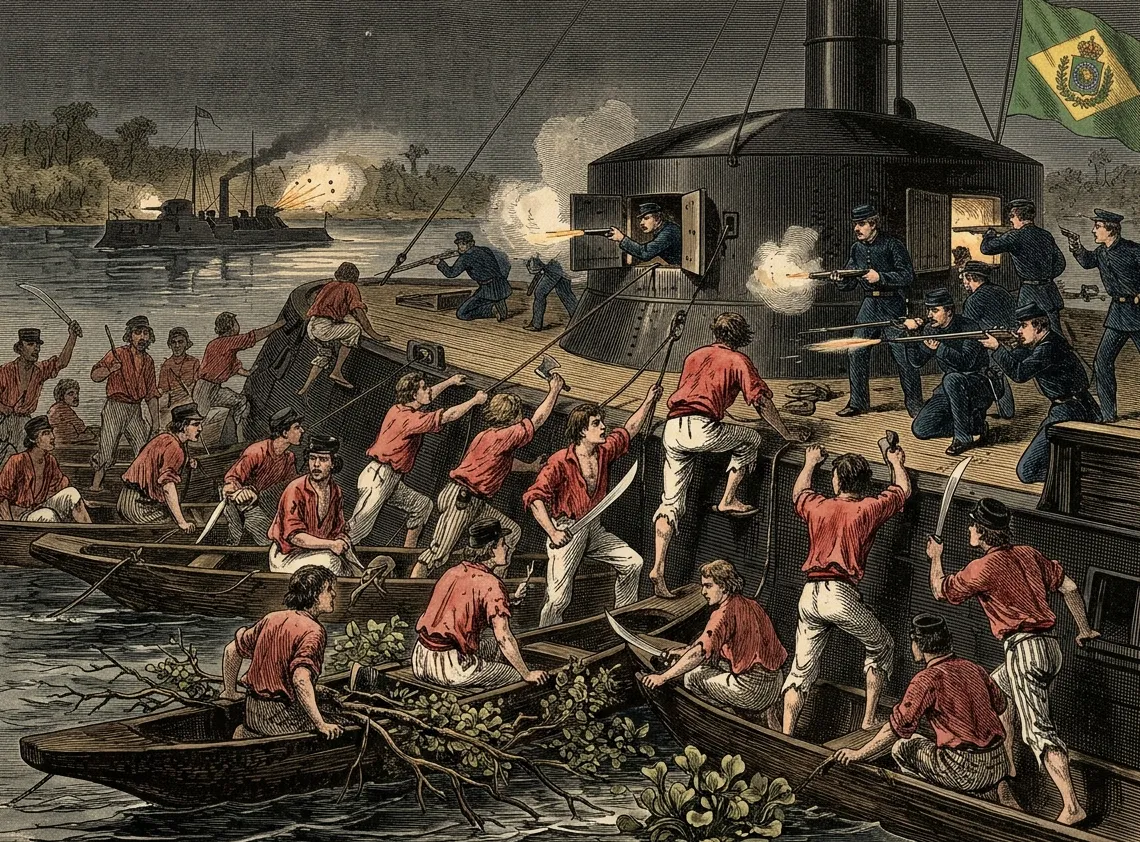
In the early hours of 2 March 1868, around two o'clock, a flotilla drifted down with the current toward the ironclads still anchored below Humaitá. The canoes went in pairs, tied to each other and covered with branches and camalotes, to look like floating plants. The men, the bogavantes, carried machetes, axes and boarding sabers.
A guard boat raised the alarm. Fourteen canoes boarded the Lima Barros and eight the Cabral. The crews shut themselves in the casemates and fired from inside, while the Herval and the Silvado swept the decks with canister. By dawn, the attack had failed. Among the Brazilian dead was Division Commander Joaquim Rodrigues da Costa.
The fortress alone
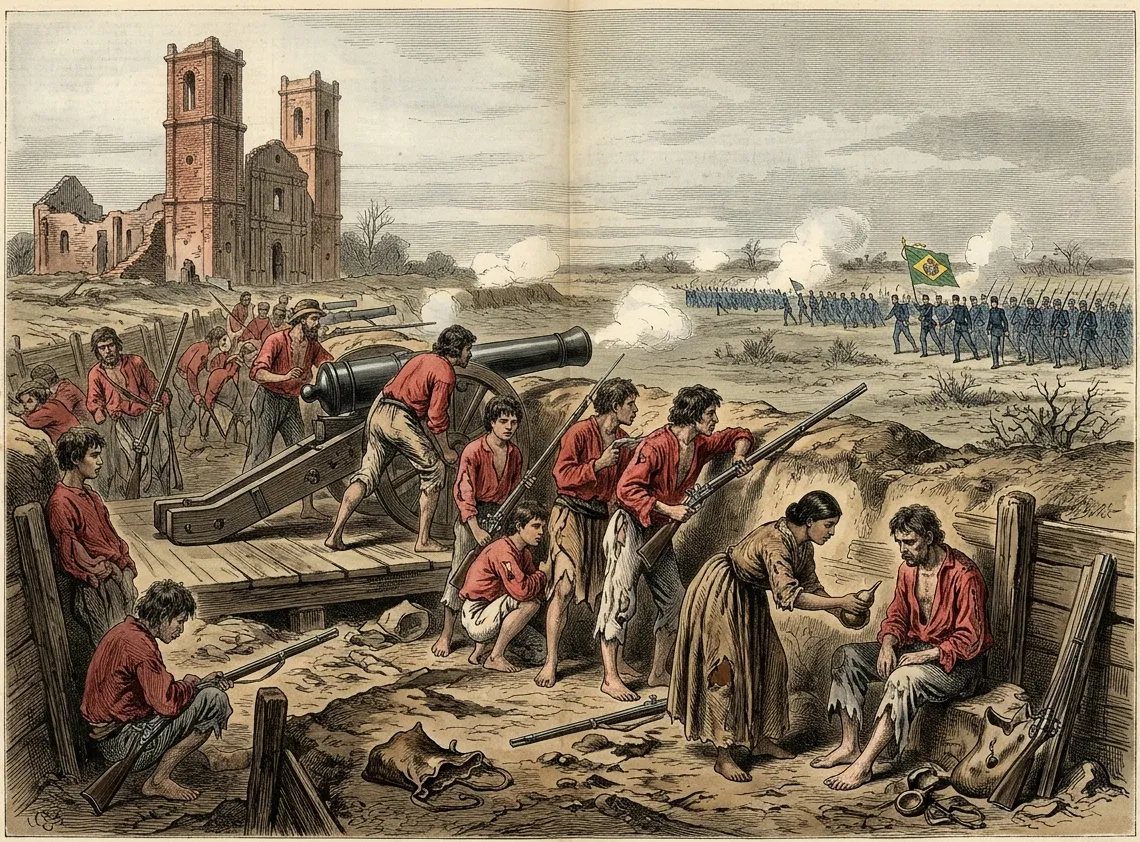
In March 1868, the Marshal left Humaitá.
López crossed to the Chaco and followed the Timbó road to San Fernando, by the Tebicuary, with the bulk of the army. That month, the Paraguayans also abandoned Curupayty and the outer lines. A garrison stayed in Humaitá under Colonel Paulino Alén: about 3,000 men and 300 women according to Colonel Juan Crisóstomo Centurión, with less and less food.
On 9 July, another twenty canoes attacked the Barroso and the Rio Grande off Tayí: the monitor's commander was killed, but the boarding failed. On 16 July, a Brazilian division under General Osório assaulted the fortress and was driven back. But the siege held. Alén proposed breaking out by land; López refused. Alén attempted to take his own life, and command passed to Colonel Francisco Martínez.
Music for an escape
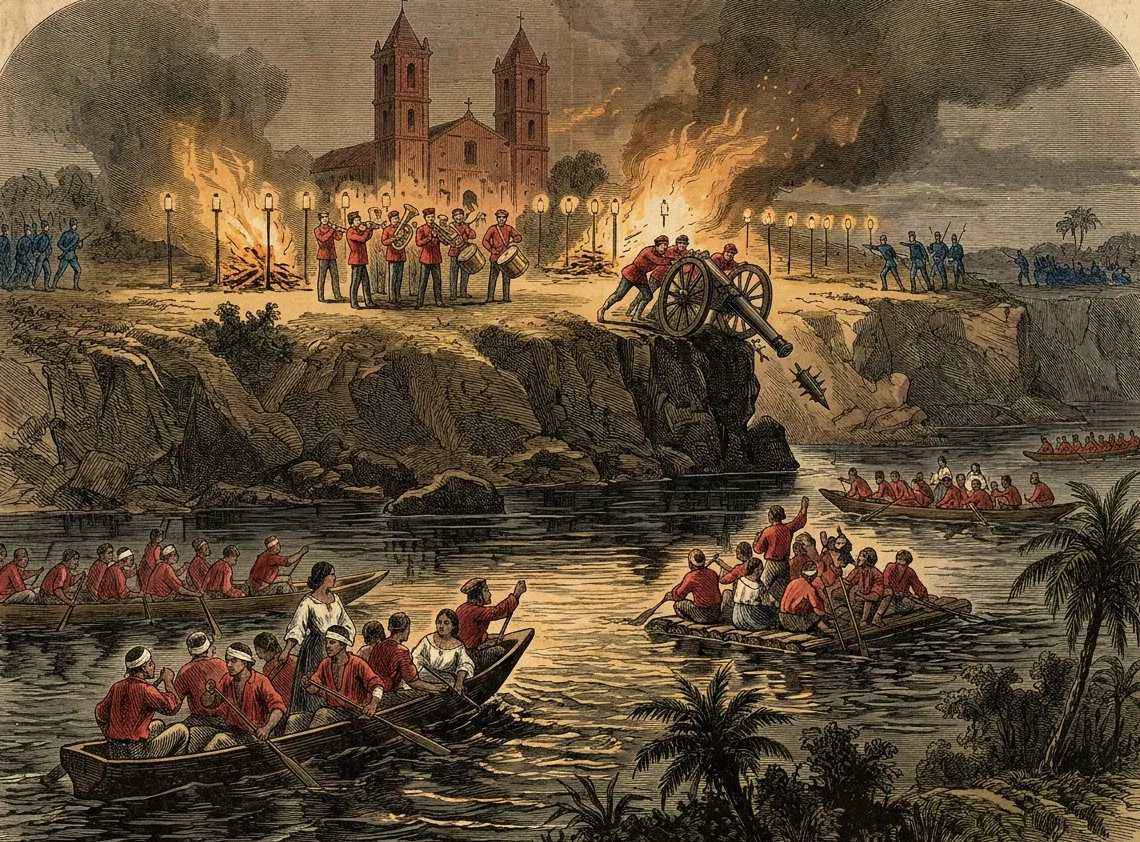
24 July was the Marshal's birthday. In Humaitá there was a celebration.
Captain Patricio Escobar had crossed the Chaco with López's order: hold out while there were supplies and then withdraw to the Chaco, destroying arms and ammunition. Martínez decided to leave. While the bands played, the bonfires burned and the salutes rang out, the gunners spiked the cannons and threw others into the river. The wounded and the women crossed first.
The canoes crossed all night and through much of the day. The last to embark were fifty men from the trench, who kept firing to deceive the enemy. The allies entered on 25 July and found the fortress empty.
Isla Poí
On the other side of the river there was no easy way out.
The garrison gathered at Isla Poí, a strip of woods between the river and the Verá lagoon. To reach Timbó they had to cross the lagoon by canoe, at night. The allied troops of the Argentine general Ignacio Rivas, with armed canoes and Brazilian ships, closed the way. There were night fights on the water, with heavy Paraguayan losses. Some groups managed to get through.
The rest were left besieged, without food. An allied chaplain came to parley, and on 5 August 1868 Martínez surrendered with some 1,200 to 1,300 men. According to the historian Jorge Rubiani, even his enemies came up to see the defender of Humaitá.
The toll
Humaitá did not fall to an assault: the garrison left by night and surrendered in the Chaco.
- 10 wounded in the squadron during the passage
- 110 to 400 Paraguayan casualties in the boarding of 2 March
- 1,000 to 2,000 Brazilian casualties in the assault of 16 July
- 1,200 to 1,300 Paraguayans surrendered at Isla Poí
The squadron got through almost without losses. The highest price was paid on land and in the canoes: the Establecimiento, the boardings of 2 March and 9 July, the assault of 16 July, the crossings of the lagoon. In the fortress, the allies found more than 180 cannons, many of them unserviceable.
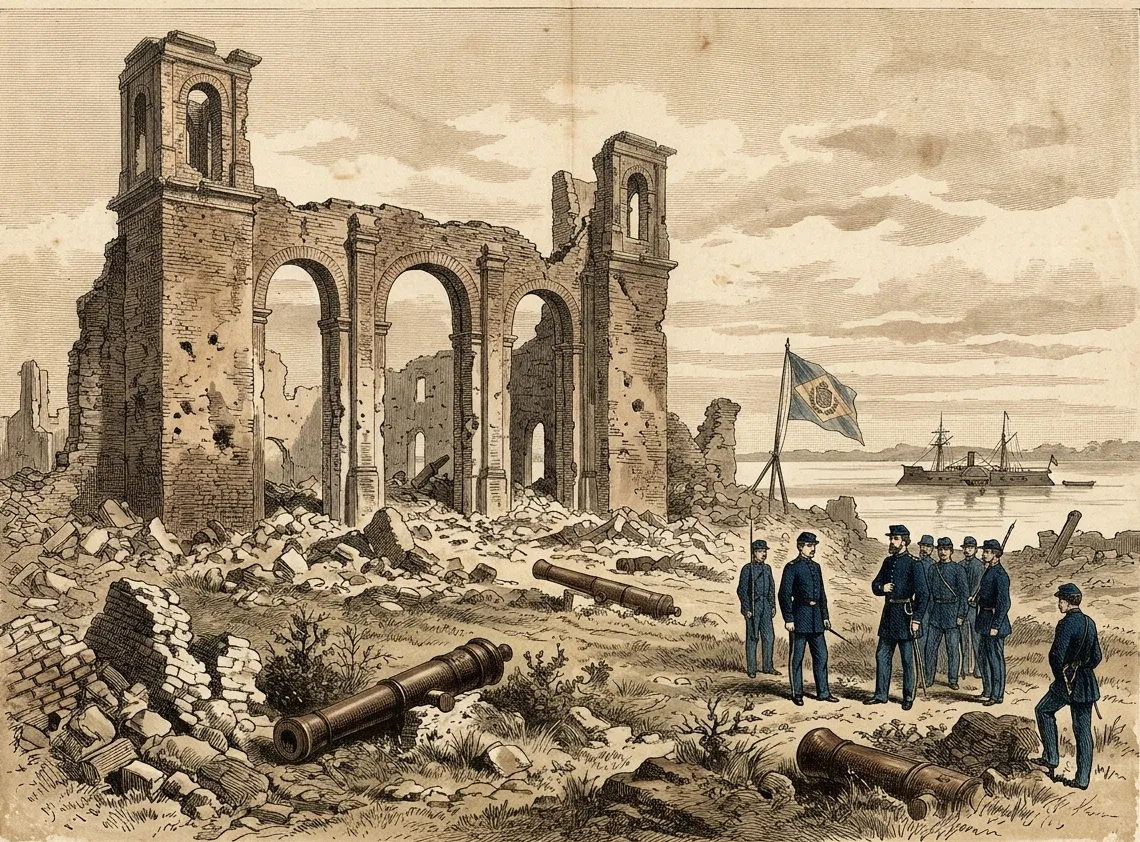
The church of San Carlos
At the heart of the fortress stood one of the largest churches in the country.
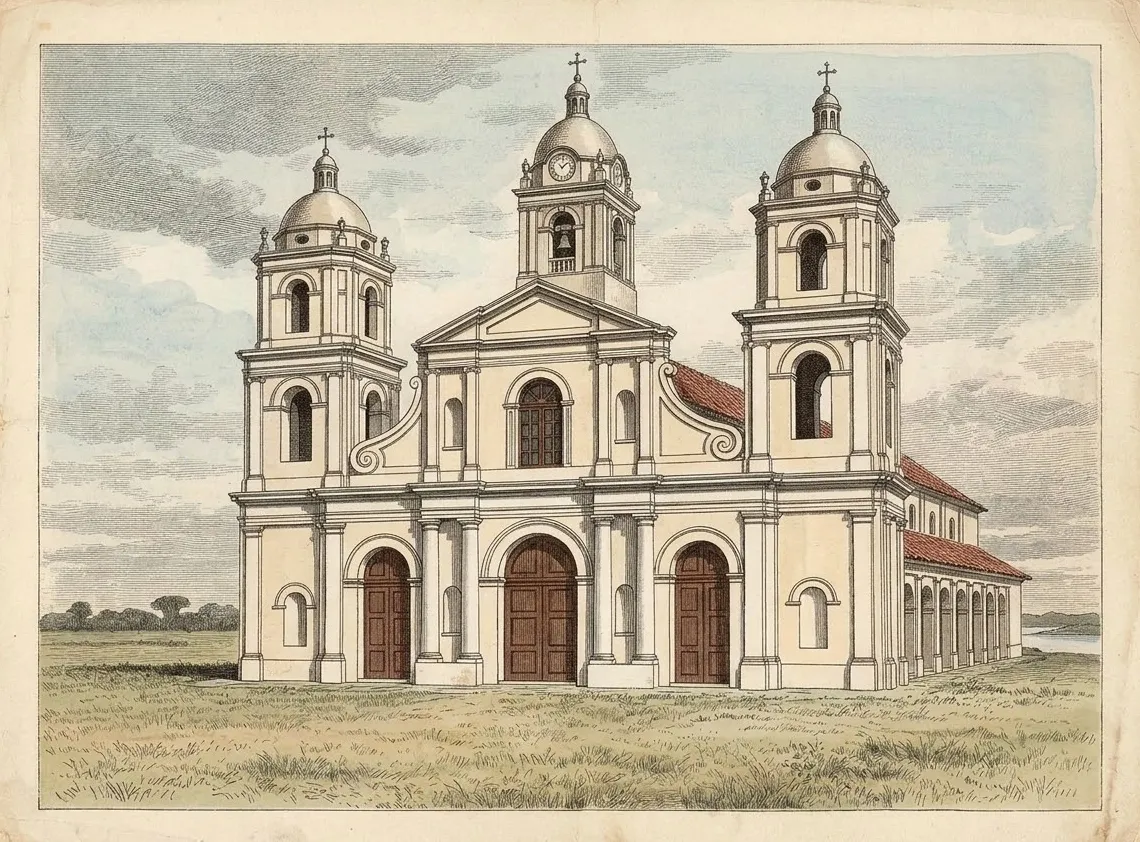
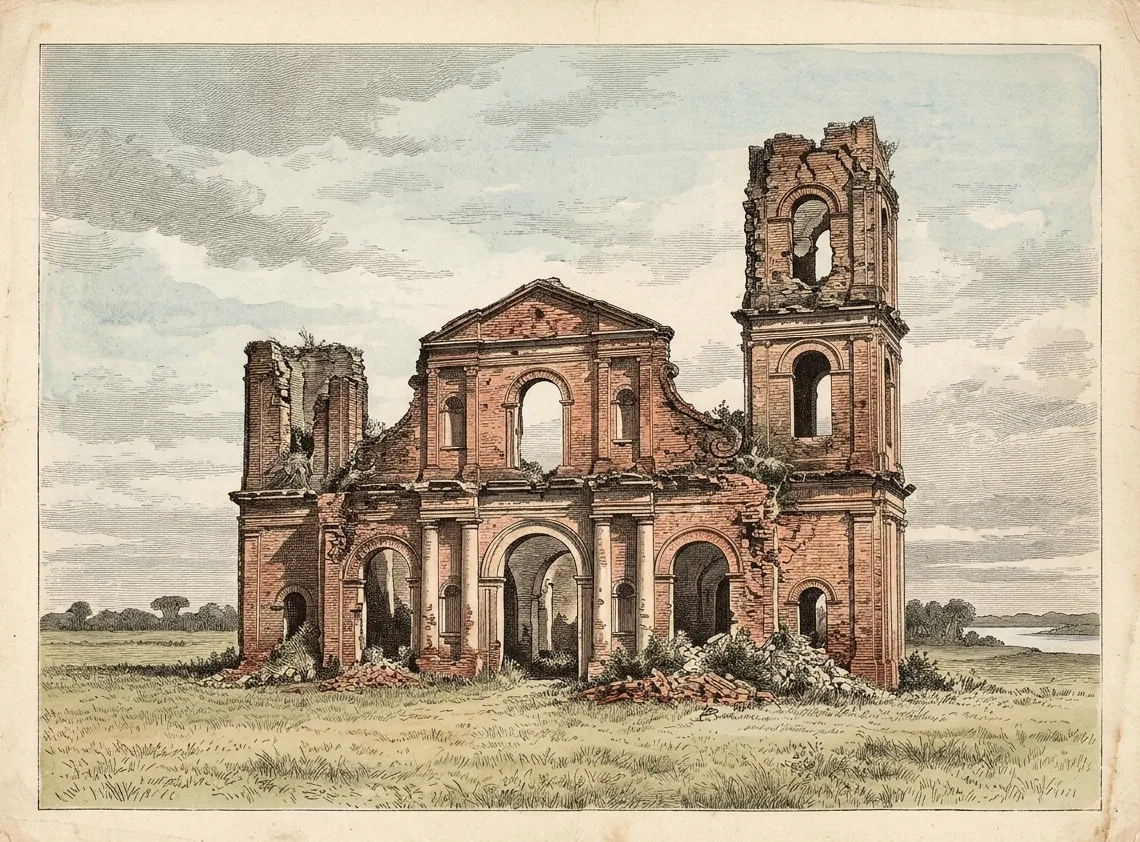
The church, dedicated to Saint Charles Borromeo, was inaugurated on 1 January 1861. It was designed by Francisco Wisner de Morgenstern, and the Italian architect Alejandro Ravizza directed the works. It had three towers; the central one, with a dome and a clock, rose almost 40 meters, and the river was watched from its belfries.
During the siege its towers served as lookouts, and the allied artillery pounded it until it lay in ruins. Part of the facade still stands today, declared a national cultural heritage site; a new church was built behind it.
After Humaitá
With Humaitá lost, the river lay open.
López settled at San Fernando, on the Tebicuary. There, in 1868, convinced that there was a conspiracy, he had hundreds of people tried and executed, among them his brother Benigno. Juliana Insfrán, Martínez's wife, was arrested and tortured as punishment for her husband's surrender, and shot on 21 December 1868.
Caxias used Humaitá as a base and had its walls demolished, as the treaty of the Triple Alliance required. The Cristiano, the great bronze cannon, was taken as a trophy to Rio de Janeiro. At the end of August the Tebicuary line fell, and the Paraguayan army fell back to the Pikysyry stream, closer to Asunción.
Martínez returned to Paraguay after the war. In 1961, the Municipal Board of Asunción removed his name from a street.
A chain under the water
The key to the river did not break in a single blow.
The flood sank the chain, the siege cut off supplies and hunger did the rest. The squadron passed in one night; the garrison held out five more months and left in canoes, to the sound of music, without handing over the fortress. For some, Humaitá was the beginning of the end. For others, proof of how far Paraguayan resistance could go.
Some battles are lost, but courage is never forgotten.
Sources
- José Báez, narration of the video «Fortaleza de Humaitá» (2025). The basis of this account, checked against the sources.
- George Thompson, The War in Paraguay (1869). Chains, the Timbó battery, the Chaco road, the boarding of 2 March.
- Revista Marítima Brasileira (Marinha do Brasil): times and pairs in the passage, the boardings of 2 March and 9 July, operations on the Tebicuary.
- Última Hora: “El natalicio del Mariscal y la evacuación de Humaitá”, with the accounts of Centurión, Gill, Resquín and von Versen; “Humaitá, el fantasma de ladrillo que aún vigila el río Paraguay”.
- ABC Color: “Una trágica epopeya que significó el principio del fin”.
- La Nación (Paraguay): Jorge Rubiani, “Los muertos del olvido”, on Martínez and Juliana Insfrán; the bombardment of the López Palace, with the historian Fabián Chamorro; the Marshal's birthday at Humaitá.
- English Wikipedia, as a cross-check: “Passage of Humaitá”, “Fortress of Humaitá”, “Humaitá campaign”, the boardings of the Cabral and the Lima Barros and of the Barroso and the Rio Grande, “Battle of Laguna Cierva”, “Battle of Acayuazá”. They cite Doratioto, Whigham, Burton and Leuchars.
- Richard Burton, Letters from the Battle-fields of Paraguay (1870), and Juan Crisóstomo Centurión, Memorias: data on El Cristiano, as cited by Última Hora («La historia del cañón Cristiano»).
Disputed points
- El Cristiano's shot: about 150 pounds (Burton). Guns in the whole fortress: 120 without the river batteries, or more than 180 found in July 1868.
- Chains: three (Thompson) or seven braided together (Burton). Batteries: eight or twelve. River guns: from about 60 to over 100.
- Date of the bombardment of Asunción: 22 or 24 February.
- Allied casualties at the Establecimiento: 576 or about 1,200.
- Boarding of 2 March: from about 290 to 1,100 Paraguayans; from 110 to 400 casualties.
- Hits on the Alagoas: 180 to 200. Canoes off Timbó: 20 or 40.
- Assault of 16 July: over 1,000 or about 2,000 Brazilian casualties. Acayuazá: 65 or about 400 allied dead.
- Night of the crossing to the Chaco: 23 to 24 or 24 to 25 July. Allied entry: 25 or 26 July.
- Surrendered at Isla Poí: 1,200 to 1,300. Name of the lagoon: Verá or Yberá.
- Military weight of the passage: decisive or limited, depending on the historian.
Four months after Isla Poí, in December 1868, Caxias's army crossed through the Chaco and landed behind the Paraguayan line. Then came Ytororó, Avay and Lomas Valentinas.
Open in the illustrated encyclopedia ›
Guerra Guasu Collection · by José Báez · Free for everyone · Home · Privacy